

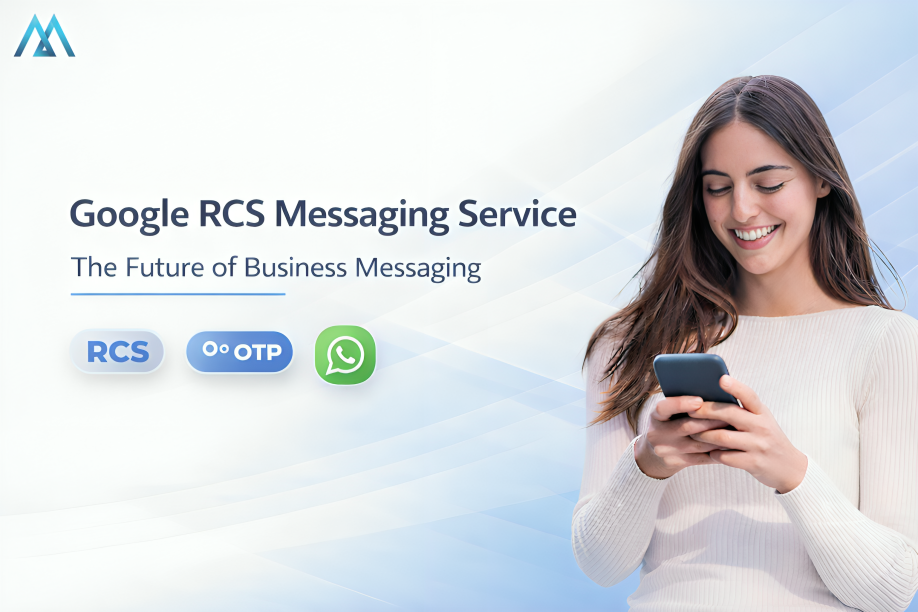
Google RCS Messaging Service is transforming how businesses communicate with customers. Rich Communication Services (RCS) brings app-like features such as images, videos, buttons, carousels, and verified sender profiles directly into the default messaging app on Android devices. Unlike traditional SMS, Google RCS allows two-way, interactive, and branded communication. This blog explains what Google RCS messaging is, how it works, its benefits, use cases, and how it compares with channels like Bulk SMS, OTP SMS, and WhatsApp SMS Service.
What Is Google RCS Messaging Service?
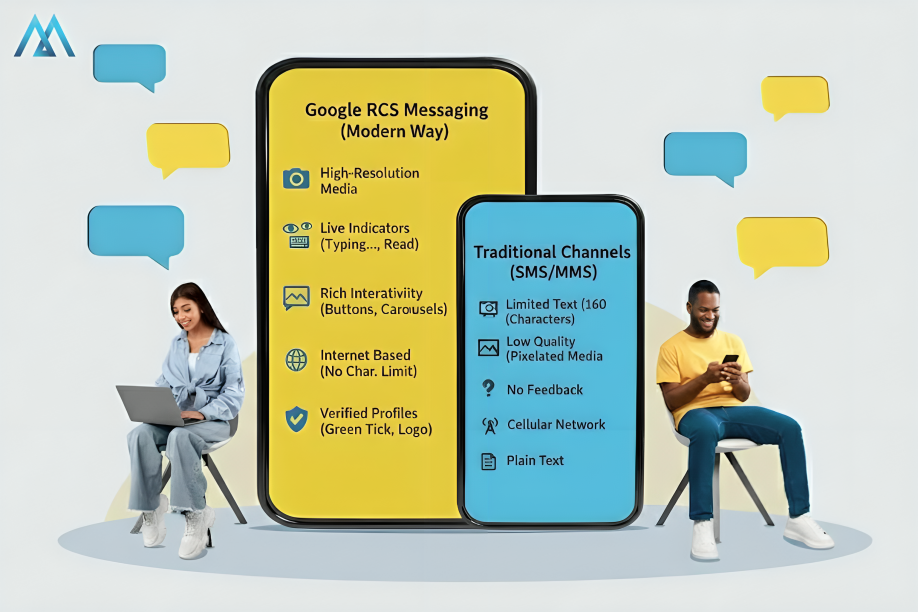
Google RCS Messaging Service is an advanced messaging protocol developed to upgrade traditional SMS. It enables businesses to send rich, interactive messages through the native Android messaging app without requiring users to install any additional application.
With Google RCS, businesses can send:
- High-quality images and videos
- Action buttons (Buy Now, Track Order, Call Us)
- Carousels and rich cards
- Branded messages with verified business names
This makes RCS messaging more engaging, interactive, and visually appealing compared to standard text messages.
How Google RCS Messaging Works
The Google RCS messaging process is simple:
- A business creates an RCS campaign
- Messages are sent via Google’s RCS platform
- Customers receive rich messages in their default messaging app
- Users can interact using buttons and quick replies
- Businesses receive engagement and delivery insights
RCS works over the internet and is currently supported on most Android devices with Google Messages enabled.
Why Businesses Are Adopting Google RCS Messaging Service
Businesses are rapidly adopting Google RCS because it combines the reach of SMS with the experience of a mobile app.
Key benefits include:
- Rich and interactive customer experience
- Higher engagement compared to traditional messaging
- Verified sender identity builds trust
- Two-way communication with customers
- Real-time delivery and read insights
For brands looking to stand out in customer communication, Google RCS is a powerful solution.
Google RCS Messaging vs Traditional Channels
Google RCS vs Bulk SMS
Bulk SMS is ideal for instant alerts, notifications, and time-critical messages. However, it is limited to plain text. Google RCS enhances messaging by adding visuals, buttons, and interactivity, making it better for marketing and engagement.
Google RCS vs OTP SMS
OTP SMS is best suited for secure authentication and verification. While RCS can support interactions, OTP SMS remains more reliable for fast, universal delivery, especially where internet connectivity is limited.
Google RCS vs WhatsApp SMS Service
WhatsApp SMS Service offers rich messaging and two-way communication but requires users to have WhatsApp installed. Google RCS works directly on the default Android messaging app, providing a more native and seamless experience for Android users.
Use Cases of Google RCS Messaging Service
Promotional Campaigns
Businesses can showcase products using images, videos, and call-to-action buttons, increasing click-through rates.
Customer Support
RCS allows customers to interact with businesses using quick replies, making support conversations faster and more efficient.
Order Updates & Tracking
Brands can send shipment updates with “Track Order” buttons, improving customer experience.
Appointment & Event Reminders
Interactive reminders allow users to confirm, reschedule, or get directions directly from the message.
How Google RCS Improves Customer Engagement
Google RCS Messaging Service delivers a richer experience than SMS. Customers can view product images, explore options, and take action without leaving the message screen.
This reduces friction, improves response rates, and helps businesses guide customers smoothly through their journey.
When to Use Google RCS with Other Channels
Google RCS works best as part of a multi-channel communication strategy.
- Use Bulk SMS for urgent alerts and mass notifications
- Use OTP SMS for secure authentication and verification
- Use WhatsApp SMS Service for conversational and support-driven communication
- Use Google RCS for interactive marketing and engagement
Combining these channels ensures maximum reach and effectiveness.
Key Features to Look for in a Google RCS Messaging Service Provider
Before choosing an RCS provider, businesses should ensure:
- Google-verified sender profiles
- Support for rich media and interactive buttons
- Campaign analytics and insights
- Easy API integration
- Compliance with messaging guidelines
A reliable provider ensures smooth execution and better campaign performance.
Conclusion
Google RCS Messaging Service represents the next evolution of business messaging. By combining rich visuals, interactivity, and verified branding, RCS helps businesses engage customers more effectively than traditional SMS. When used alongside Bulk SMS, OTP SMS, and WhatsApp SMS Service, Google RCS becomes a powerful part of a complete communication strategy. Businesses that adopt RCS early gain higher engagement, stronger brand trust, and improved customer experiences.
Is Google RCS better than SMS?
Yes, RCS offers images, videos, buttons, and two-way interaction, while SMS is limited to plain text.
Does Google RCS work on all phones?
Google RCS works mainly on Android devices with Google Messages enabled.
Is Google RCS secure?
Yes, RCS uses verified business profiles and secure messaging standards.
Can RCS replace OTP SMS?
No, OTP SMS is still more reliable for authentication and verification.
Is Google RCS suitable for marketing?
Yes, it is highly effective for interactive and engagement-driven campaigns.