


In modern elections, speed and direct communication decide campaign success. Political parties must connect with millions of voters quickly, clearly, and personally. One of the most powerful tools they use today is bulk voice calls . This technology allows parties to send recorded voice messages to lakhs or even crores of voters within hours.
In West Bengal, where voter diversity, geography, and language vary greatly, bulk voice calls help political parties deliver their message directly to voters’ mobile phones. This method is fast, cost-effective, and highly scalable.
This blog explains how the system works, the technology behind it, and how parties reach 1 crore voters in just one day.
What Are Bulk Voice Calls?
Bulk voice calls are automated phone calls that deliver a pre-recorded message to a large number of recipients at the same time. Instead of calling each voter manually, political parties use automated systems to broadcast messages instantly.
These messages can include:
- Candidate introductions
- Campaign promises
- Voting reminders
- Event announcements
- Party achievements
When voters receive these calls, they hear a real human voice, often from the candidate or party leader. This creates trust and emotional connection.
Why Political Parties Use Bulk Voice Calls ?
Political campaigns need communication tools that are fast, reliable, and effective. Bulk voice calls offer several advantages:
1. Massive Reach in Minimum Time
Political parties can reach millions of voters within hours. With advanced systems, reaching 1 crore voters in a single day is possible.
2. Direct and Personal Communication
Voice messages feel more personal than SMS or ads. Hearing a familiar leader’s voice builds trust.
3. Works on All Mobile Phones
Unlike apps or internet campaigns, bulk voice calls work on basic phones and smartphones. This is important in rural areas.
4. High Engagement Rate
Most people answer phone calls. Even missed calls increase awareness.
5. Cost-Effective Campaigning
Compared to rallies or TV ads, bulk voice calls are affordable and scalable.
Step-by-Step Process Political Parties Use
Here is the complete process political parties follow to reach 1 crore voters in one day.
Step 1: Collecting Voter Data
Political parties collect voter mobile numbers from:
- Public voter databases
- Party membership lists
- Campaign registrations
- Surveys and outreach programs
The data is organized based on location, language, and voter segments.
For example:
- Kolkata voters receive Bengali messages
- Rural voters receive simple and localized messages
This improves effectiveness.
Step 2: Recording the Voice Message
The next step is recording the campaign message. This is usually done by:
- Party leaders
- Local candidates
- Influential public figures
The message is clear, short, and engaging.
Example message structure:
- Greeting
- Introduction
- Key campaign message
- Call to action (Vote reminder)
This recording becomes the core content of the bulk voice calls campaign.
Step 3: Uploading Message to OBD Platform
Political parties use OBD services (Outbound Dialing services) to broadcast voice messages automatically.
OBD services allow campaigns to:
- Upload voice recordings
- Upload voter contact lists
- Schedule call timing
- Monitor delivery reports
Once uploaded, the system starts calling voters automatically.
This is the backbone technology behind bulk voice calls.
Step 4: Using High-Speed Cloud Calling Systems
Advanced telecom systems use cloud servers and telecom gateways to deliver thousands of calls per second.
For example:
- 1 server can make 10,000 calls simultaneously
- Multiple servers can make lakhs of calls per minute
This is how parties scale bulk voice calls to reach 1 crore voters in one day.
The system works automatically without manual effort.
Step 5: Using IVR Services for Interaction
Many campaigns also use IVR services (Interactive Voice Response).
IVR services allow voters to interact using keypad input.
Example:
“Press 1 to support the candidate Press 2 to receive more information”
This helps parties:
- Measure voter interest
- Collect feedback
- Identify supporters
This makes bulk voice calls not just informative, but interactive.
Example Campaign Timeline: Reaching 1 Crore Voters in 24 Hours
Here is how political parties execute large campaigns.
Preparation Phase (1–2 Days)
- Collect voter data
- Record voice message
- Upload to OBD platform
Execution Phase (24 Hours)
- System starts automated calling
- Millions of calls delivered every hour
- Real-time monitoring
Completion Phase
- Reports generated
- Engagement analyzed
- Supporters identified
This efficient process makes bulk voice calls a powerful campaign tool.
Technology Behind Bulk Voice Calls
The system uses several advanced technologies:
Cloud Telephony
Cloud servers manage and distribute calls efficiently.
Telecom Gateways
These connect servers to telecom networks.
Automated Dialers
These systems automatically dial numbers without human effort.
IVR Integration
Using IVR services, voters can respond and interact.
Analytics Dashboard
Campaign teams monitor performance in real time.
These technologies ensure reliable delivery of bulk voice calls.
Targeting Specific Regions in West Bengal
Political parties do not send the same message to everyone.
They segment voters based on:
- District (Kolkata, Howrah, Siliguri, etc.)
- Language
- Age group
- Voting history
This improves effectiveness.
For example:
Urban voters may receive development messages.
Rural voters may receive welfare-focused messages.
This targeted approach makes bulk voice calls highly effective.
Legal and Compliance Requirements
Political parties must follow telecom and election rules.
In India, campaigns must comply with guidelines from the Election Commission of India.
Requirements include:
- Using registered telecom routes
- Avoiding spam practices
- Including proper identification
- Respecting voter privacy
Professional OBD services providers ensure compliance.
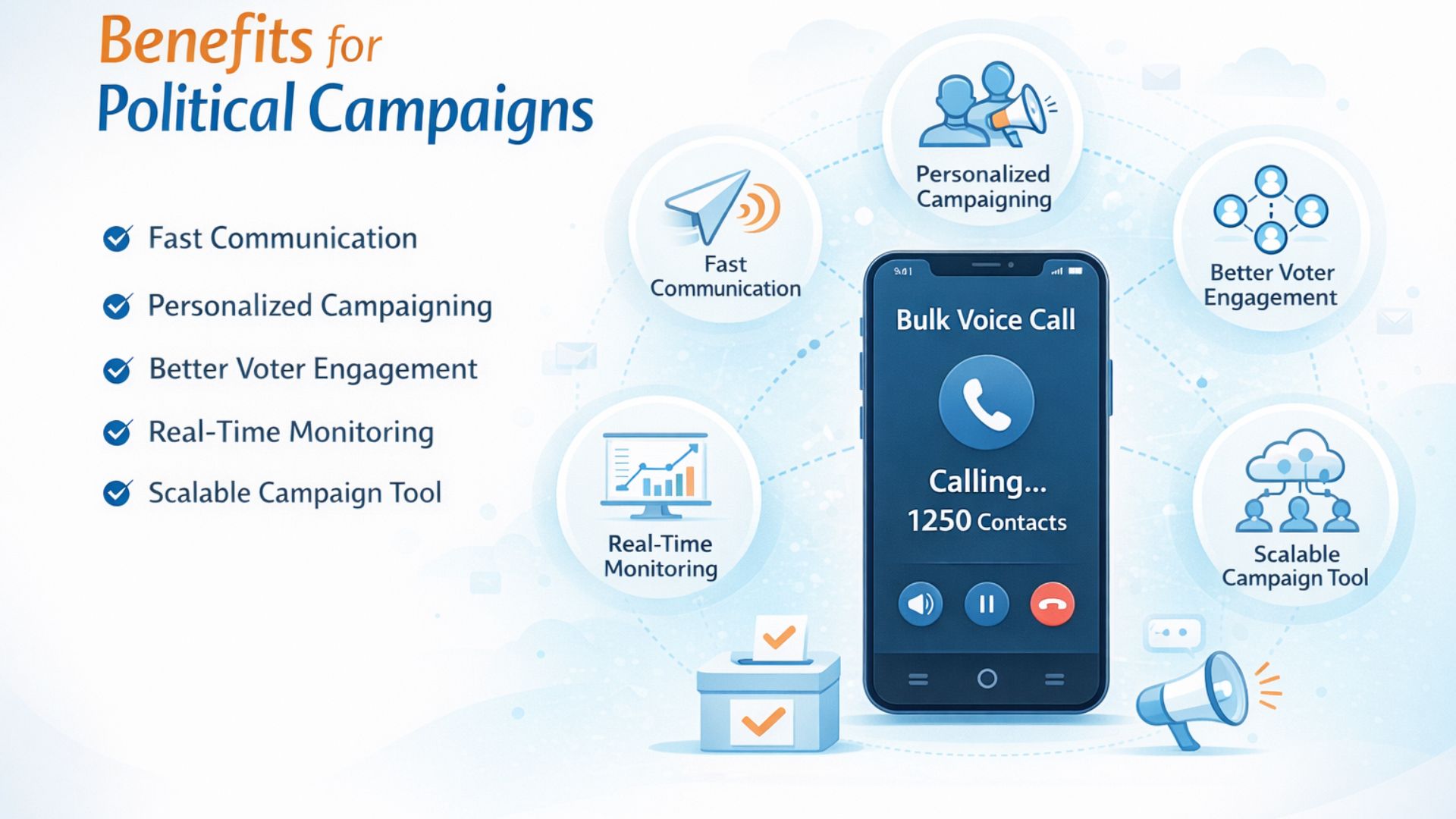
Benefits for Political Campaigns
Here are the key benefits of using bulk voice calls:
Fast Communication
Reach crores of voters instantly.
Personalized Campaigning
Localized voice messages increase trust.
Better Voter Engagement
Voice creates emotional connection.
Real-Time Monitoring
Track delivery and response instantly.
Scalable Campaign Tool
Campaigns can scale anytime.
These benefits make bulk voice calls essential for modern elections.
Real-World Impact in West Bengal Elections
West Bengal has over 7 crore voters. Reaching them physically is impossible.
With bulk voice calls, political parties can:
- Reach 1 crore voters in one day
- Deliver leader messages directly
- Increase campaign visibility
- Improve voter turnout
This technology has transformed election campaigning.
It saves time, cost, and effort.
How Political Parties Choose Service Providers
Campaign teams select professional providers offering:
- Reliable OBD services
- Advanced IVR services
- High call delivery speed
- Real-time reporting
- Telecom compliance
Choosing the right provider ensures successful bulk voice calls campaigns.
Future of Political Campaign Communication
Technology will continue to improve election campaigns.
Future features include:
- AI voice personalization
- Smart voter targeting
- Real-time voter interaction
- Data-driven campaign optimization
But even today, bulk voice calls remain one of the most powerful campaign tools.
Conclusion
Political parties in West Bengal use advanced telecom technology to reach massive audiences quickly. With automated dialing, cloud telephony, OBD services, and IVR services, they can deliver voice messages to 1 crore voters in just one day.
The process is simple but powerful:
- Collect voter data
- Record campaign message
- Use automated dialing systems
- Deliver calls instantly
This makes bulk voice calls one of the most effective tools in modern political campaigns. It allows parties to connect directly with voters, build trust, and deliver their message at scale.
How do political parties reach 1 crore voters in one day?
Political parties use cloud telephony, OBD services, and auto dialers to send bulk voice calls simultaneously. These systems make thousands of calls per second and reach millions quickly.
What are OBD services in political campaigns?
OBD services (Outbound Dialing) send pre-recorded voice calls automatically to voter lists. Political parties use OBD services to deliver campaign messages quickly and efficiently.
How do IVR services help political campaigns?
IVR services let voters interact using keypad input during calls. Political parties use IVR to collect feedback, identify supporters, and improve engagement.
Is bulk voice call communication legal in India?
Yes, bulk voice calls are legal when political parties follow telecom rules and regulations. Professional providers ensure proper compliance.