


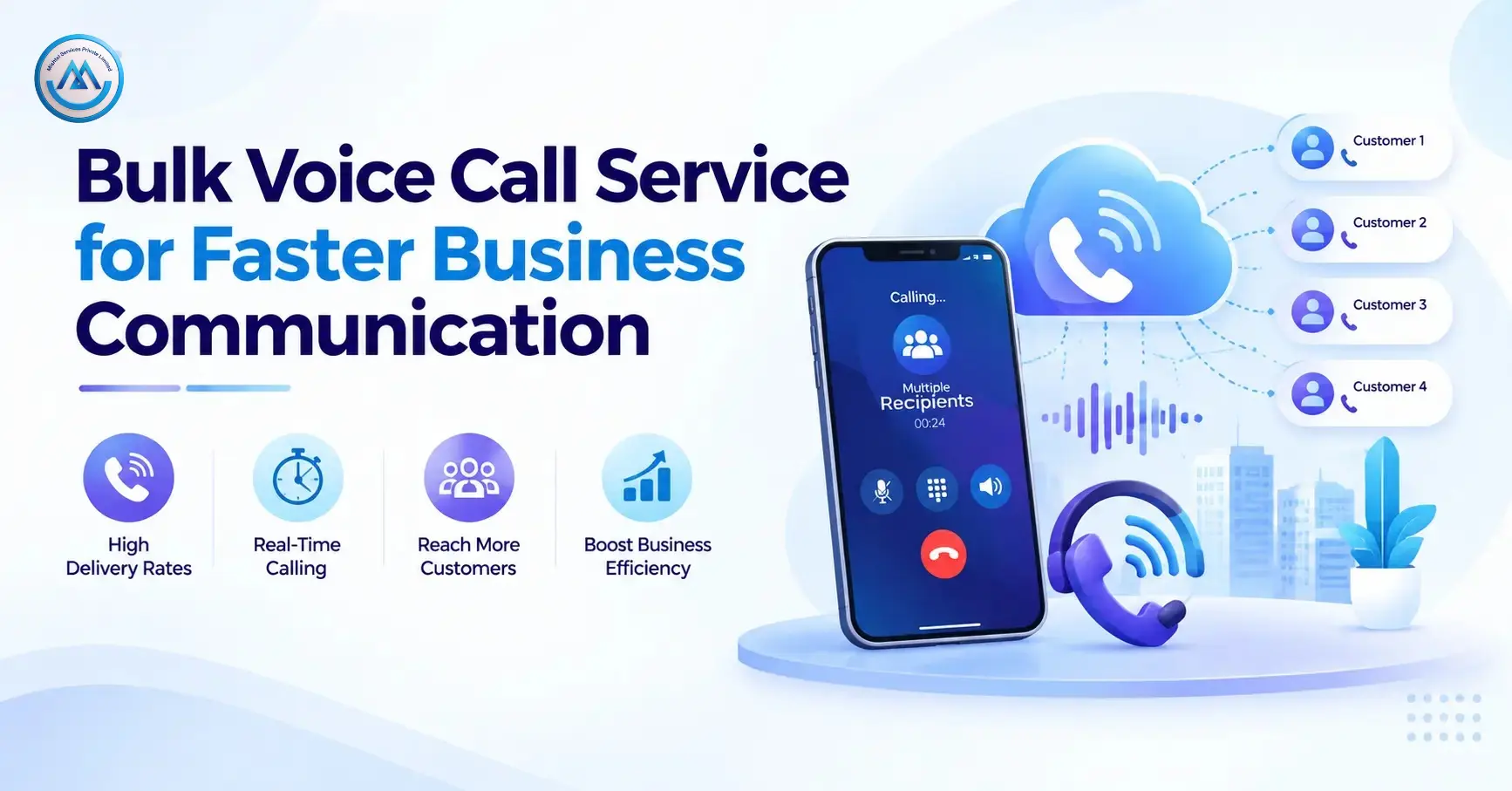
Reaching a large number of customers can be difficult when every call is made manually.
A sales team may need to follow up with leads. A hospital may need to send appointment reminders. A bank may need to remind customers about payments.
Calling every customer one by one takes time.
This is where Bulk Voice Call Service can help.
It allows businesses to send a recorded voice message to many customers through an automated calling system. The team can create one message and use it for a large contact list.
This makes voice communication easier to manage and reduces repetitive calling work.
How Does Bulk Voice Calling Work?
The process is simple.
First, the business prepares a customer contact list. Then, it creates a voice message for the campaign.
The message can be recorded in the required language. After that, the contact list and voice message are added to the calling platform.
The system then starts the calls based on the campaign settings.
A simple workflow looks like this:
Customer List → Voice Message → Campaign Setup → Automated Calls → Call Reports
This process helps businesses manage large calling campaigns without asking agents to dial every number manually.
When Should a Business Use Bulk Voice Calls?
Bulk voice calls are useful when the same information needs to reach many people.
For example, a business may need to remind customers about an appointment. A school may need to inform parents about a schedule change. A service company may need to notify customers about a planned visit.
Voice calls can also be used for selected promotional or informational campaigns, depending on the purpose and applicable communication rules.
The main benefit is simple.
One message can be delivered to a large audience without repeating the same task manually.
Bulk Voice Calls for Customer Reminders
Reminders are one of the common uses of automated voice calls.
Businesses can use voice communication for:
- Appointment reminders
- Payment reminders
- Subscription renewals
- Service reminders
- Booking updates
- Event reminders
- Scheduled notifications
For example, a clinic can send an automated reminder before an appointment.
A service company can also call customers before a technician visit.
These small reminders can be handled automatically instead of taking agent time.
Voice Calls for Customer Alerts
Some messages need quick attention.
A customer may not notice an email or SMS immediately. A voice call provides another direct way to deliver the information.
Businesses can use automated voice calls for service alerts, schedule changes, delivery updates, and important announcements.
The message can be created once and sent to the selected customer list.
This is especially useful when the same update needs to reach many customers within a short period.
Add IVR for Customer Responses
A voice campaign does not always have to be one-way.
Businesses can add an IVR Service when they want customers to select an option after hearing the message.
For example:
Press 1 to confirm an appointment.
Press 2 to speak with the support team.
Press 3 to hear the information again.
This can turn a simple voice broadcast into a more interactive communication process.
It also helps businesses route customers to the right team when human assistance is required.
Use Different Languages for Wider Reach
India has customers who speak different languages.
A voice message can be prepared in the language that suits the target audience.
For example, a business may create separate messages for Hindi, English, Bengali, Tamil, or other regional audiences.
Using a familiar language can make the message easier to understand.
Businesses should still keep the script short and clear. A simple message is easier to follow during an automated call.
Schedule Your Voice Campaign
Businesses may not want to start every campaign immediately.
Campaign scheduling can help teams plan calls in advance.
For example, a business can prepare a reminder campaign today and schedule it for the required date.
Scheduling can be useful for:
- Appointment reminders
- Payment follow-ups
- Event notifications
- Service updates
- Planned announcements
It also gives the team better control over communication activities.
Track Your Call Reports
Sending calls is only one part of the process.
Businesses also need to know what happened after the campaign started.
A voice calling platform can provide campaign reports with available call status and delivery information.
These reports can help teams understand campaign activity and plan the next step.
For example, unanswered calls may need a different follow-up channel.
A business can send an SMS or use another approved communication method instead of asking an agent to manually check every customer.
Combine Voice Calls with SMS
Voice calling does not have to work alone.
Businesses can combine voice calls with a Bulk SMS Service when they want to share the same information in both voice and text.
For example:
Step 1: Send an automated voice reminder.
Step 2: Send an SMS with the important details.
Step 3: Allow the customer to contact the business if needed.
This creates a simple multi-channel communication flow.
The best channel depends on the message, customer preference, and business requirement.
Connect Voice Communication with a Cloud Call Center
Some campaigns may generate customer responses.
If customers call back after receiving a voice message, the business needs a way to handle those calls.
A Cloud Call Center can help teams manage incoming customer calls through a central system.
This can connect outbound communication with customer support.
For example:
Bulk Voice Call → Customer Response → Incoming Call → Agent Support
This type of workflow can reduce communication gaps between campaign and support teams.
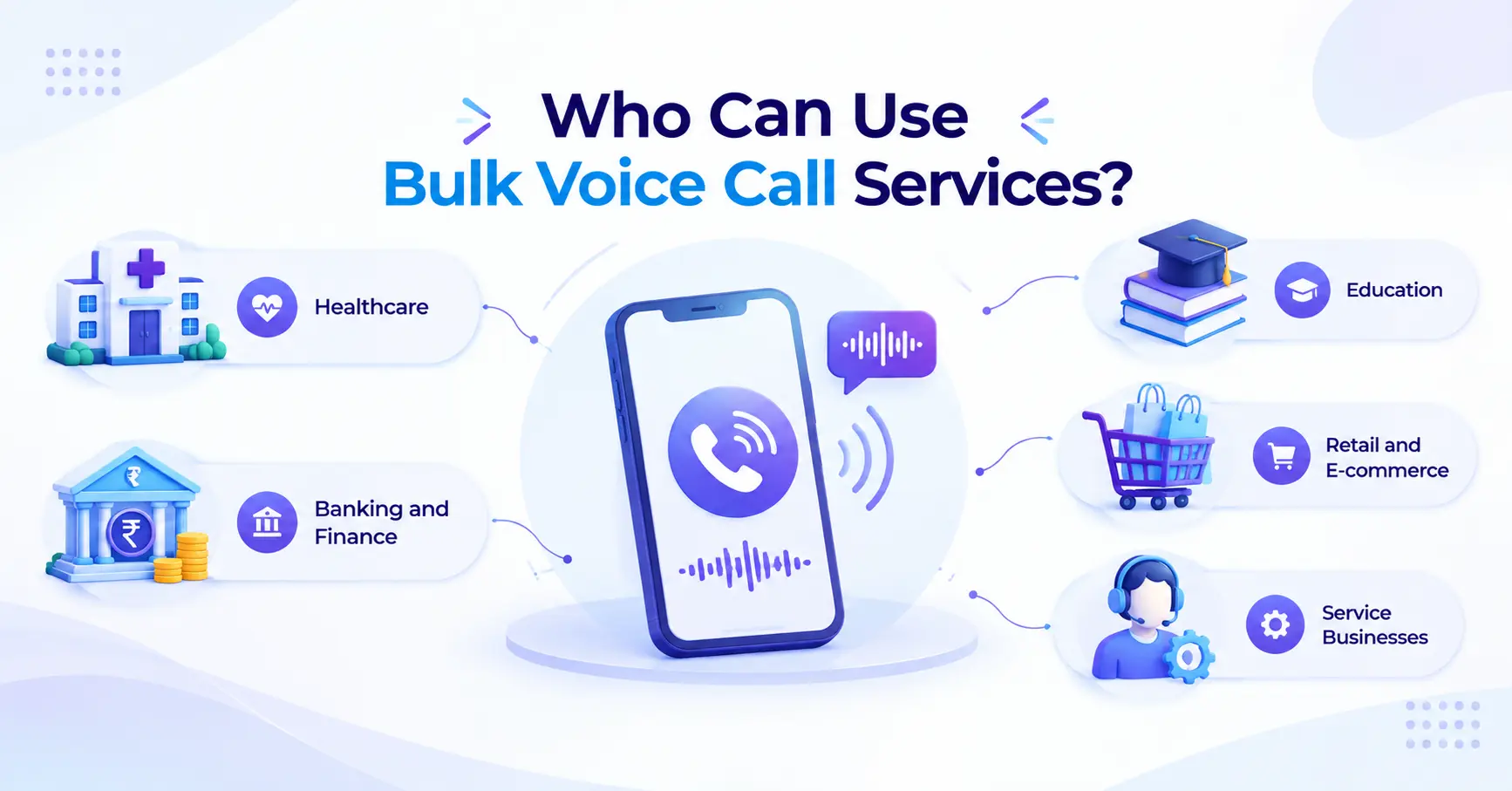
Who Can Use Bulk Voice Call Services?
Bulk voice communication can be useful across different industries.
Healthcare
Hospitals and clinics can use automated calls for suitable appointment and service reminders.
Education
Schools, colleges, and training centers can use voice calls for announcements, reminders, and schedule updates.
Banking and Finance
Financial businesses can use automated calls for suitable payment, service, and account-related reminders.
Retail and E-commerce
Retailers can use voice communication for selected customer notifications, announcements, and campaign communication.
Service Businesses
Maintenance, repair, and field service companies can use automated calls to remind customers about scheduled services.
Keep Voice Messages Short and Clear
A good voice message should be easy to understand.
Avoid putting too much information into one call.
A simple structure works well:
Introduction → Main Message → Next Step
For example:
“Hello, this is a reminder from ABC Services. Your service appointment is scheduled for tomorrow at 11 AM. Please contact our support team if you need assistance.”
The message is short and gives the customer one clear piece of information.
Follow Applicable Communication Rules
Businesses should use automated voice communication responsibly.
Commercial communication in India is subject to applicable telecom rules, customer preferences, and registration or consent requirements, depending on the type of communication.
TRAI provides guidance and frameworks for commercial communications and customer preference management. Businesses should check the current requirements before running campaigns.
The calling platform should also be configured according to the applicable communication category and business use case.
How to Start a Bulk Voice Campaign
Getting started does not need to be complicated.
Step 1: Define the Purpose
Decide what you want to communicate.
Step 2: Prepare Your Contact List
Use the customer data allowed for your communication purpose.
Step 3: Create the Voice Message
Keep the message short, clear, and easy to understand.
Step 4: Configure the Campaign
Select the required audience, schedule, and campaign settings.
Step 5: Start and Monitor
Launch the campaign and check the available reports.
Step 6: Plan Follow-Up
Use the campaign results to decide whether another communication channel is needed.
Why Use Automated Voice Communication?
The main value of automated voice calls is the reduction of repetitive work.
Instead of assigning agents to make the same call again and again, businesses can automate the first communication.
This can help teams save time and focus on conversations that need human attention.
Voice communication can also be combined with IVR, SMS, and cloud calling to create a complete customer communication workflow.
Final Thoughts
Bulk voice calling gives businesses a simple way to communicate with a large customer base.
It can be useful for reminders, alerts, announcements, and other suitable business communication.
The process becomes more useful when businesses combine automation with scheduling, reporting, and customer support.
The goal is not to replace every customer conversation with an automated call.
The goal is to automate repetitive communication and give the team more time for conversations that need a human response.
Yes. Campaign scheduling can be used when the selected voice platform supports scheduled campaigns. Yes. Businesses can prepare voice messages in languages suitable for their target audience, depending on the platform and campaign setup. Yes. IVR can be added when customers need to select options or connect with a support team. Yes. Voice calls and SMS can be used together as part of a multi-channel communication workflow. Commercial voice communication is subject to applicable telecom regulations and customer preference requirements. Businesses should follow the current rules applicable to their communication type.
Can I schedule bulk voice calls?
Can I use a regional language for voice calls?
Can Bulk Voice Calls work with IVR?
Can I use SMS along with voice calls?
Are automated voice calls regulated in India?