


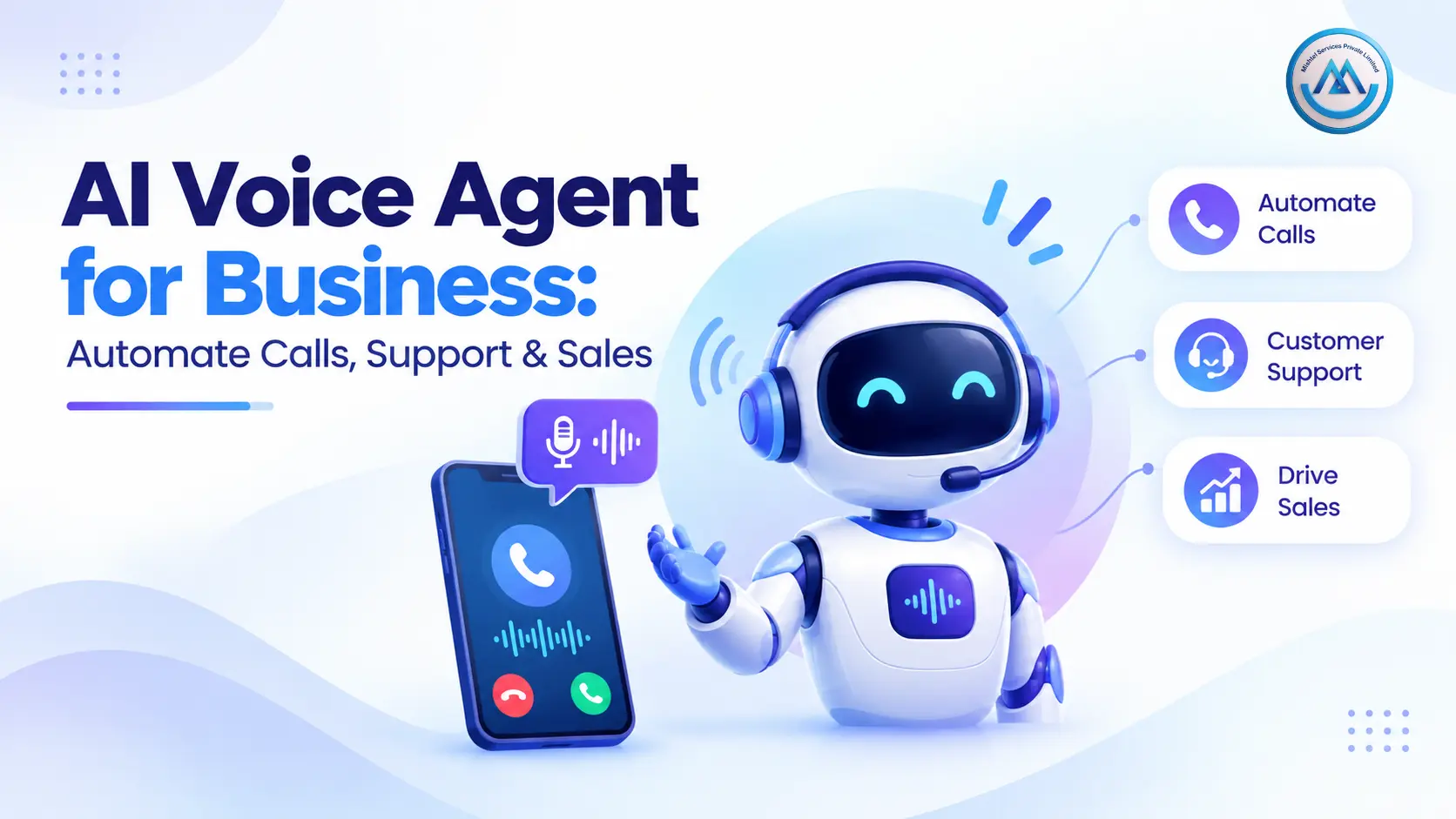
Phones keep ringing all day. Customers ask the same questions again and again. Leads sit untouched for hours. Support teams feel buried.
An AI Voice Agent can help businesses manage this workload. It handles routine phone calls on its own, so your team gets time for work that really needs a human.
What Is an AI Voice Agent?
It is a system that can answer or make phone calls by itself. It listens to what the caller says, understands the request, and replies, much like a real conversation. No button presses needed. People simply talk, and the system responds.
How Does It Work?
- A customer calls in or gets a call
- The system listens carefully
- It understands the intent
- It gives an answer or does the task
- Hard calls go to a human agent
- Call details get saved for reports
This works for both incoming and outgoing calls.
For Customer Support
Support teams answer the same questions daily. This tool can take some of that load off their hands. It can manage:
- FAQs
- Order or service status
- Simple account queries
- Appointment details
- Sending tough issues to a human agent
Customers get quicker answers, and staff get more time for real problems.
For Sales Follow-Ups
Leads often go cold because follow-up is slow. This system can call leads soon after they come in, ask set questions, and check the answers. It helps identify who seems genuinely interested, and your sales team can then step in to take the conversation forward.
For Lead Qualification
Not every lead is ready to buy. The system can ask:
- What service do you need?
- When do you need it?
- What is your exact requirement?
- Would you like to speak with our sales team?
Your team gets more organized leads, instead of a random list to work through.
For Reminders and Follow-Ups
Missed reminders can cost time and money. Automated calling can support appointment reminders, payment reminders, renewal reminders, service reminders, callback reminders, and simple follow-ups. This keeps communication more consistent without adding extra manual work.
Inbound vs. Outbound Calling
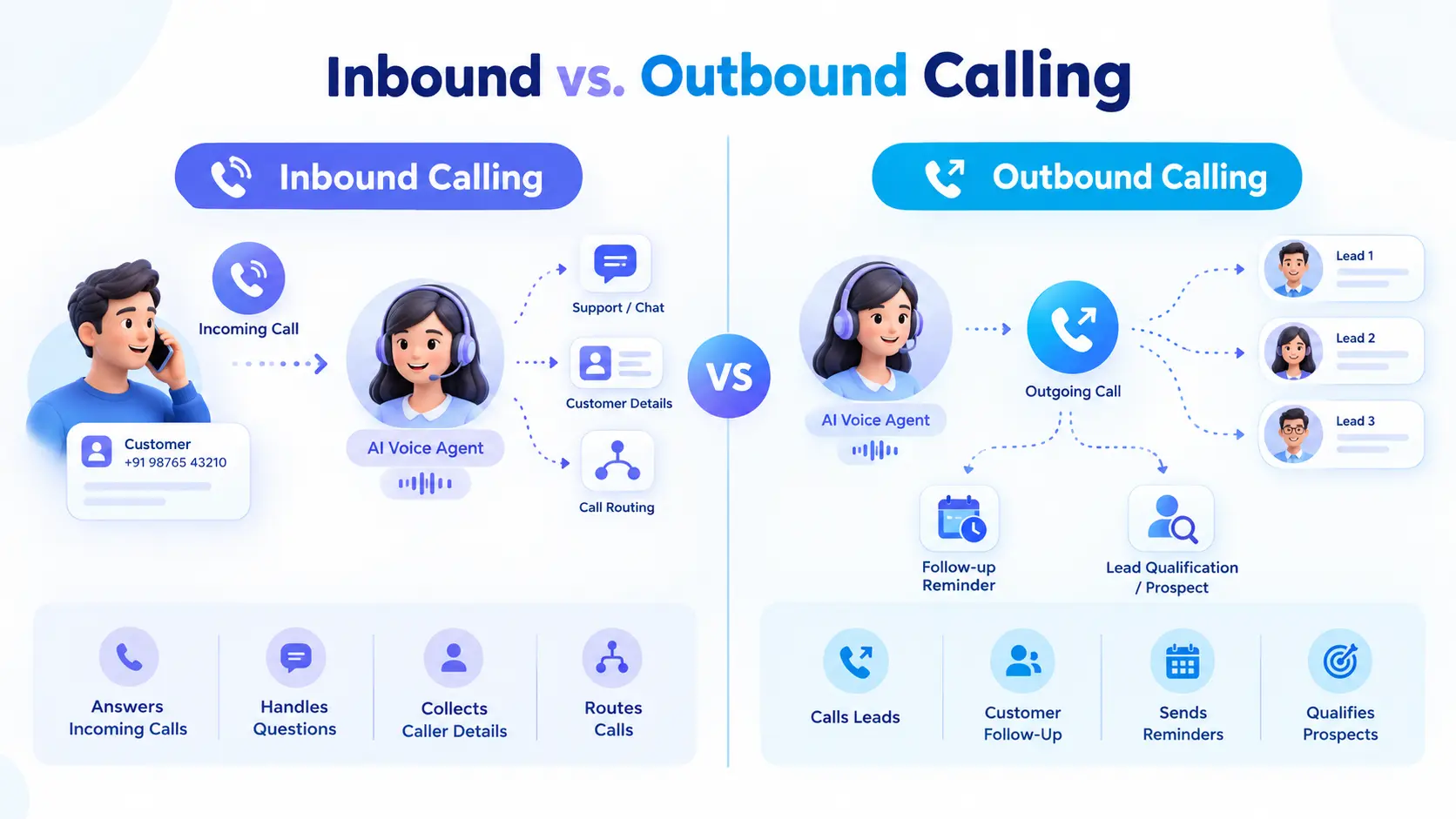
Many businesses use both together, depending on their needs.
When It Needs a Human
This tool is not meant to replace every human call. Some conversations need empathy or careful judgment of a complaint, a sensitive issue, or a request outside its defined scope. That’s why human handoff matters. Businesses can set clear rules for when a call should move to a person.
Working with CRM and Business Systems
For real value, this tool needs to connect with your existing systems. Through CRM and API integration, customer data, lead status, and call logs can flow into your workflow. This can reduce manual data entry and keep customer information more organized.
Pairing with Other Communication Tools
Voice automation often works best as part of a larger setup. Some businesses pair it with an IVR Service for structured call routing or a Bulk Voice Call Service for one-way announcements.
Some send follow-up texts using a Bulk SMS Service, while larger call volumes are often managed through a Cloud Call Center.
Other useful additions include a Missed Call Service for lead capture, a Click2Call Service for website-based calling, and a Toll-Free Number so customers can reach you easily.
Who Can Use This?
Many industries can explore this, such as e-commerce, healthcare, real estate, education, financial services, travel, service businesses, and B2B companies. Each may use it a bit differently, based on call volume and needs.
Key Benefits
- Faster call handling
- Can be available 24/7, depending on the business setup
- Less repetitive work for staff
- Quicker lead follow-up
- Easier to scale during high call volumes
- More consistent communication
- Human handoff when needed
- Clearer call logs and reports
Results can vary by business. It helps to keep expectations realistic and review results over time.
How to Start
- Define your exact use case
- Build the conversation flow
- Connect your business systems
- Test calls properly before going live
- Launch and keep monitoring
Why the Shift Is Happening
Businesses are also exploring conversational systems alongside traditional phone menus and manual calling. Conversational AI for business can feel more natural to callers and handle a wider variety of requests. The change is gradual, but more businesses are testing this approach for part of their call operations.
Final Thoughts
An AI voice agent tends to work best for repetitive, high-volume, and clearly defined calls. It is not built to replace every human conversation—sensitive or complex calls still need a real person.
Mishtel offers voice automation solutions built around this balance. Mishtel focuses on practical automation that fits into existing business workflows, without removing your team from the picture.
It listens to the caller, understands the intent, gives a relevant response or action, and passes the call to a human agent when needed. Yes. It can be used for outbound calling such as lead follow-ups, reminders, and short surveys. Yes. Businesses can set clear rules for when a call should move to a person. Yes. Many setups can connect with CRM and other business systems to sync call data and lead information. Pricing can vary based on call volume, use case, integrations, languages, and deployment requirements. It's best to check current pricing directly with a provider.
How does an AI voice agent work for a business?
Can it make outbound calls?
Can it transfer calls to a human?
Can it work with CRM software?
How much does an AI voice agent cost in India?