


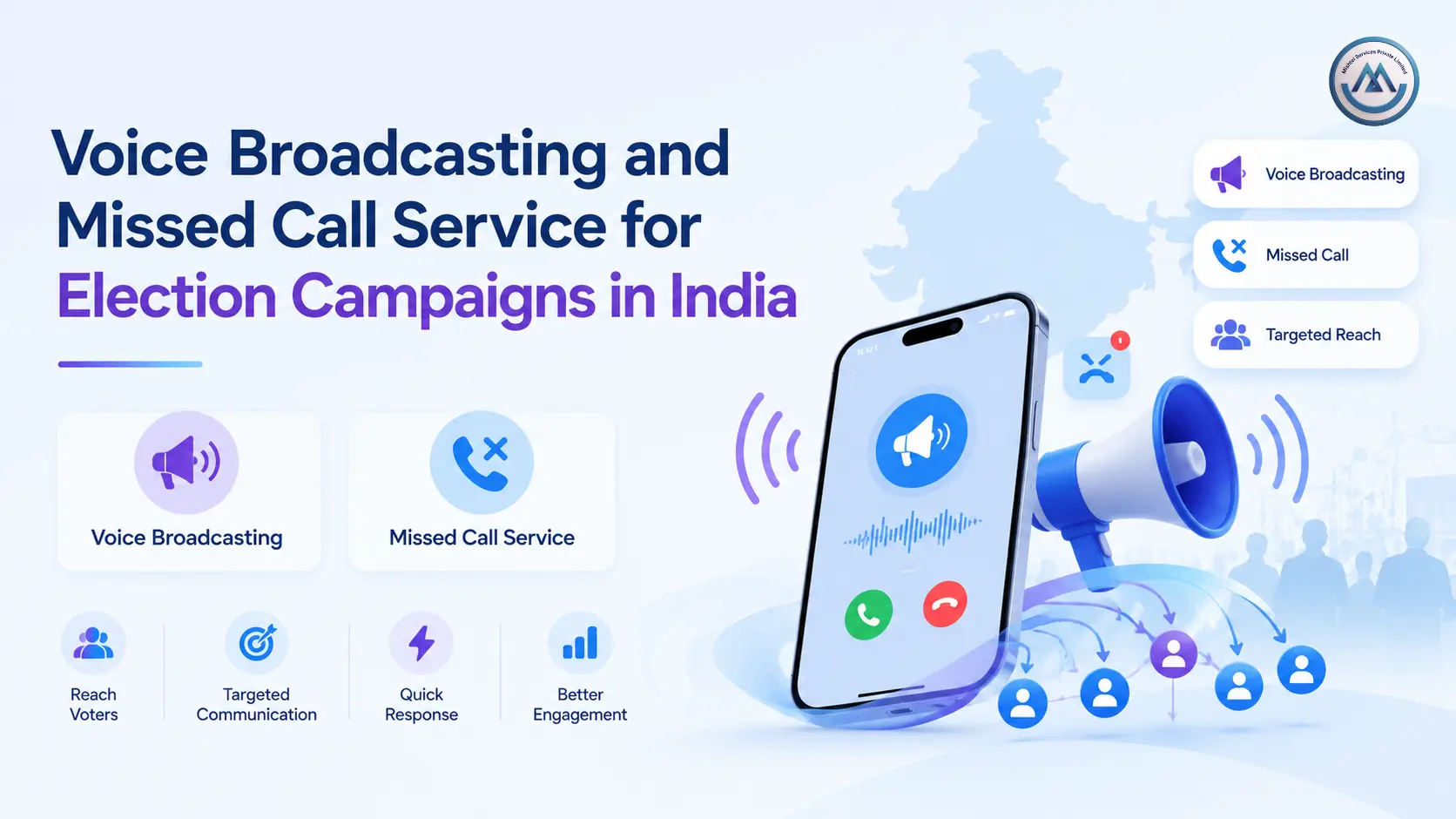
Election campaigns depend on timing. A venue changes, a meeting moves, or volunteers need a new schedule. Calling people one by one is slow. Voice broadcasting for election campaigns helps teams share recorded messages with many people quickly. A missed call service gives people a simple way to respond. This guide explains how both work and what to check before you begin.
What Is Voice Broadcasting for Election Campaigns?
Voice broadcasting sends a recorded voice message to many phone numbers through automated calls. You record the message once, and the system plays it when people answer. This is often offered as a Bulk Voice Call Service.
Campaign teams can use it for:
- Event announcements
- Meeting reminders
- Schedule updates
- Volunteer coordination
- Public information
- Other permitted campaign communications
How Voice Broadcasting Works
The process is simple:
- Prepare and record your message.
- Upload a contact list of people who may receive the call.
- Schedule the campaign for a suitable date and time.
- The system dials each number and plays the message.
- Review the call reports to see which calls were answered.
Automated voice calls for campaigns save time. They also keep the message consistent, since every listener hears the same recording.
What Is a Missed Call Service for Election Campaigns?
A missed call service gives people a number they can call and let it ring. The call disconnects on its own, and the system records the caller’s number. The caller usually does not need to speak to anyone.
This makes it easy to take part. People can ask for information, request a callback, or register voluntarily. Other teams can offer the same number for feedback or volunteer sign-ups. The Missed Call Service is widely used in India because most people already know how to give a missed call.
How Missed Call Services Work
Here is the basic flow:
- You publish a dedicated number on posters, messages, or social media.
- A person gives a missed call to that number.
- The system records the number and the time of the call.
- The system can then trigger a follow-up, such as a callback or a recorded message.
- Your team views the collected numbers in a report.
A missed call service in India works best when the purpose is clear. Tell people exactly why they should call.
Benefits of Voice Broadcasting and Missed Call Services
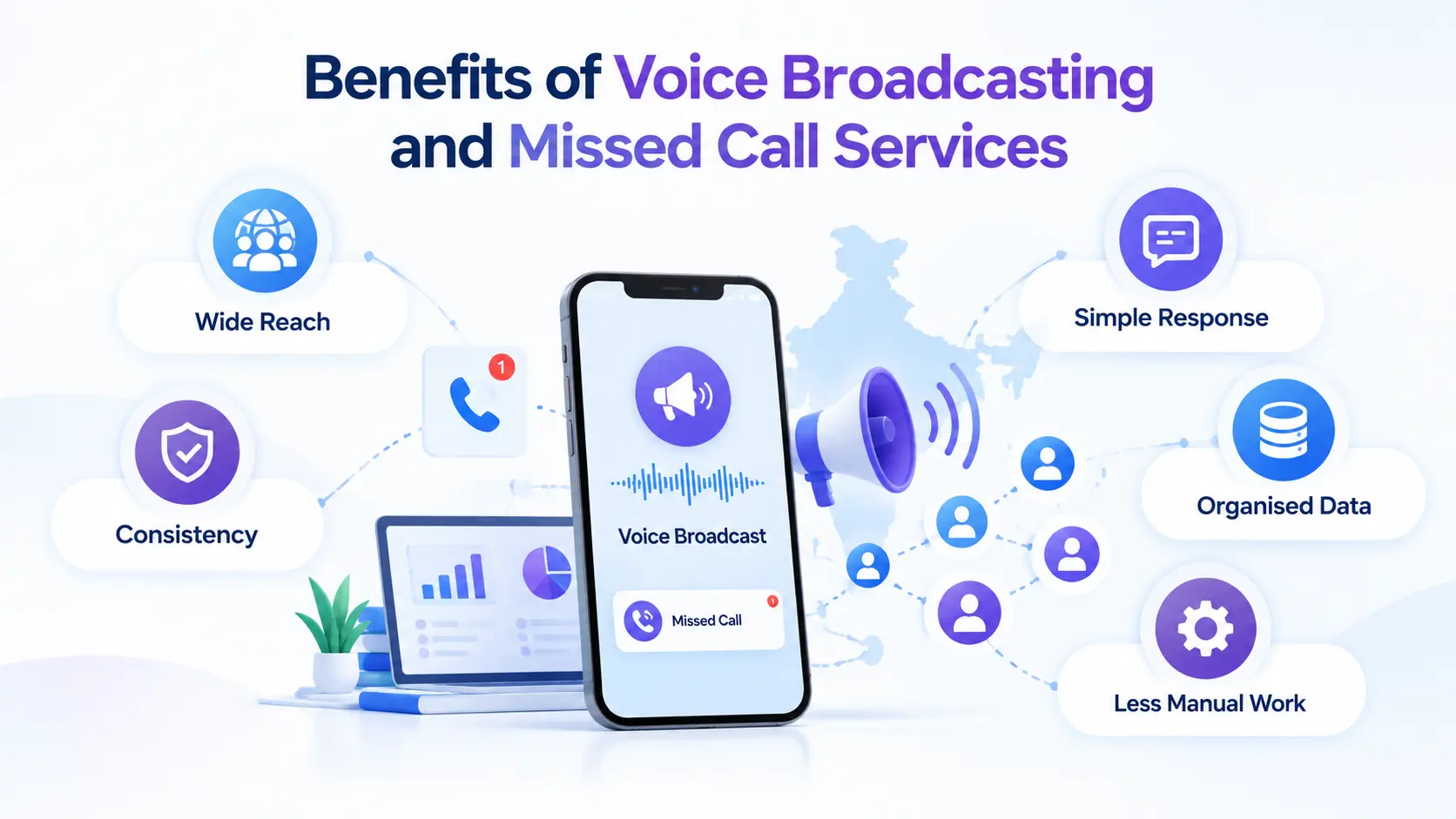
- Wide reach: Share one message with many people in a short time.
- Consistency: Everyone hears the same information.
- Simple response: People can reply with one missed call.
- Organised data: Numbers and call reports stay in one place.
- Less manual work: Teams spend less time on repeat calls.
Results still depend on your list, your message, and your timing. These tools support campaign communication. They do not guarantee outcomes.
How to Use Both Services Together
One service delivers information. The other collects responses.
For example, a recorded message can announce a community meeting. It can then ask people to give a missed call to confirm interest or request details. Your team can follow up with those callers. If you want callers to choose from options, an IVR Service can offer a short voice menu.
This approach turns one-way messaging into a simple two-way flow.
How to Plan an Effective Election Communication Campaign
Good planning matters more than volume. Follow these steps:
- Set a clear goal. Decide whether you want to inform, remind, or collect enquiries.
- Choose your audience. Use only contacts you are permitted to call.
- Keep the message short. Aim for clear language and one main point.
- Pick the right time. Avoid hours that may disturb people.
- Prepare your team. Make sure callbacks have someone ready to handle them. A Cloud Call Center can help manage these calls.
- Test first. Send a trial before the full campaign.
Some teams also look at an AI voice agent to handle routine questions. Check whether it suits your workflow.
Why Choose Mishtel for Election Campaign Communication?
Different campaigns have different needs. Mishtel offers bulk voice calls, missed call service, IVR, and cloud call center solutions. You can combine them based on your workflow, such as announcements first, then responses, then callbacks.
Mishtel also offers Chunavi Sewa, a service page focused on election-related communication. Reviewing it can help you see which tools match your requirements.
Choosing tools that fit your process helps keep communication organised. If you want to discuss your needs, contact Mishtel and talk to the team.
Responsible and Compliant Election Communication
Campaign calls must follow the rules. Before you start, check the current guidelines from the Election Commission of India. Also review applicable telecom regulations, consent requirements, and any restrictions on campaign communication.
Use contact data responsibly. Keep messages factual and clear. Requirements can change, so verify them before each campaign, and consult a legal professional if you are unsure.
Final Thoughts
Voice broadcasting and missed call services are communication tools. One shares recorded information at scale, and the other gives people an easy way to respond. Used together and with proper planning, they can make campaign communication more organised. Always follow the rules and keep your messages clear.
A person gives a missed call to a dedicated number. The system records the caller’s number, and the team can follow up or send information. Voice broadcasting sends outbound recorded messages. IVR handles calls with a menu, letting callers choose options by pressing keys. Yes. You record the message once, and the system plays it to each contact who answers. You share a number for a specific purpose. People who give a missed call are recorded, so your team can respond later. Yes. A broadcast can share information and invite a missed call. The missed call then acts as a simple response. Mishtel offers bulk voice calls, missed call service, IVR, and cloud call center tools. You can choose the ones that suit your workflow. Check consent, applicable telecom rules, and Election Commission of India guidelines. Also plan your message, timing, and follow-up process.
How does a missed call service work?
What is the difference between voice broadcasting and IVR?
Can voice broadcasting deliver recorded announcements?
How can missed call services collect enquiries?
Can voice broadcasting and missed call services work together?
How can Mishtel help with election communication?
What should organisations consider before launching automated calls?