

Imagine a customer with a question about an order. They hesitate to call because they worry about charges, or they don’t know which number to dial. Many of them give up. So what is a toll-free number, and can it help? It is one way to make calling your business simpler and clearer. This guide explains how Toll-Free Number work, where businesses use them, and how to set one up in India.
What Is a Toll-Free Number?
A toll-free number is a business phone number that callers can dial without paying for the call. The business that owns the number pays the applicable call charges instead.
An ordinary business number works the other way around. The caller pays based on their own phone plan. In India, a 1800 toll-free number is the most familiar example. Whether a call is fully free for the caller can depend on the number type and the telecom arrangements involved, so businesses should confirm the terms with their provider.
How Does a Toll-Free Number Work?
A toll-free number does not belong to one physical phone line. It points to a telephone system that the business sets up. Here is the basic flow:
- A customer dials your toll-free number.
- The call reaches the telephone system you have configured.
- The system routes the call to a department, an agent, or a support team.
- You pay the call charges according to your plan.
Routing rules decide who answers. For example, calls can go to a support desk during working hours and to another team after hours. Some businesses add an automated menu so callers can choose an option. This is called IVR, or interactive voice response. You can read more about how an IVR Service guides callers to the right team.
Key Benefits of a Toll-Free Number for Businesses
The benefits are practical. Results still depend on how well your team handles calls.
- Easier access to support: Callers don’t have to think about call charges before reaching out.
- A professional presence: A dedicated business number looks more established than a personal mobile number.
- Centralised call handling: One number can serve customers across cities and states, so you don’t need to publish many local numbers.
- Better call distribution: Calls can be shared across agents or departments instead of landing on one phone.
- Support for wider reach: Businesses serving customers in different locations can offer a single, consistent contact point.
Common Uses of Toll-Free Numbers
Toll-free numbers suit businesses that expect regular inbound calls. Common examples include:
- Customer support: Product help, troubleshooting, and general questions.
- E-commerce: Order tracking, delivery updates, returns, and refunds.
- Banking and financial services: Account queries, card issues, and service requests.
- Healthcare: Appointment bookings and basic enquiries.
- Education: Admission questions and course information.
- Service businesses: Complaint handling and service bookings.
Not every business needs one. A small local shop with few inbound calls may be fine with a regular number.
Toll-Free Number vs Regular Business Number
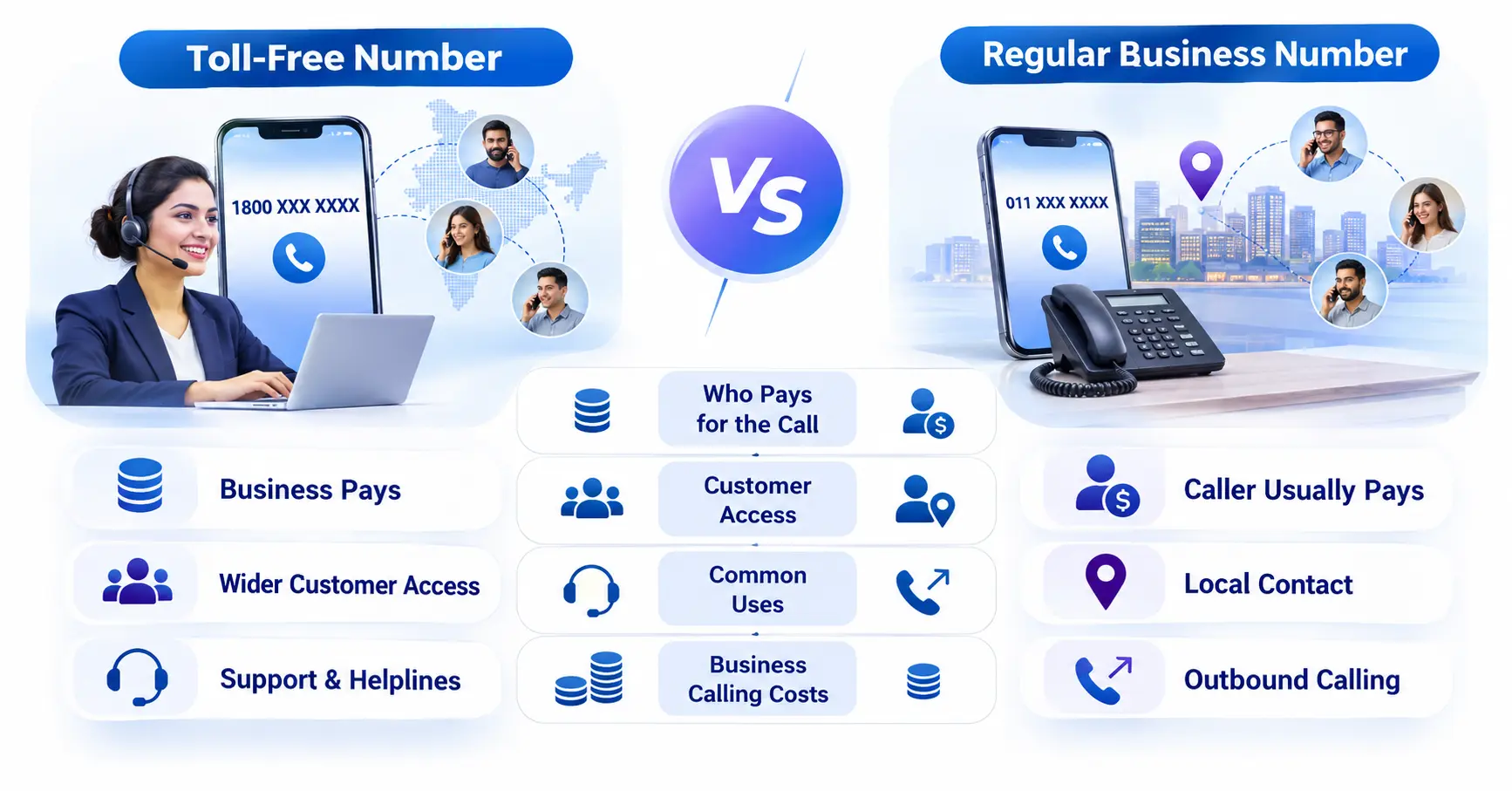
Neither option is better for everyone. The right choice depends on your call volume, customer base, and budget.
How to Set Up a Toll-Free Number in India
Toll-free number setup is easier when you plan first. Follow these steps:
- Estimate your needs. Think about how many calls you expect and how many agents will answer.
- Compare providers and plans. Look at features, support, and pricing.
- Confirm the details. Check number availability, charges, and applicable terms before you commit.
- Configure the call flow. Set up call forwarding, departments, or IVR if you need them.
- Test before launch. Call the number yourself and check that every route works before you share it with customers.
Requirements and timelines can differ between providers, so ask yours for current details. For a broader look at the local landscape, see this overview of toll-free number service in India.
How Much Does a Toll-Free Number Cost?
There is no single industry price. Your total cost can depend on:
- The plan you choose
- Your monthly call usage
- Any included call value
- Call forwarding setup
- Extra features such as IVR or reporting
Check current plan details on the Mishtel pricing page before you decide.
How to Choose the Right Toll-Free Number Service
Look beyond the monthly fee. Ask these questions:
- Is the pricing transparent? You should understand what is included and what costs extra.
- Are calls clear and reliable? Poor call quality frustrates customers.
- What routing options exist? Look for call forwarding, IVR, and agent or department routing.
- What reporting is available? Call records help you spot busy hours and missed calls.
- Is support easy to reach? You will want help if something goes wrong.
- Can it scale? The service should grow with your team and call volume.
Why Consider Mishtel for Toll-Free Number Services?
Mishtel provides business communication solutions, including toll-free numbers and call-management tools. These can help businesses handle inbound calls in an organised way. You can explore Mishtel’s voice solutions to see how calling features fit together. For more on how the service supports business communication, read about Mishtel’s toll-free number services.
Final Thoughts
A toll-free number lets customers call your business without paying for the call, while you handle routing and costs. It can make support easier to reach and calls easier to manage. Before choosing a service, check pricing, call quality, routing options, and how well it can grow with you. If you want a deeper reference, Mishtel’s comprehensive, toll-free guide covers more detail. When you are ready, explore Mishtel’s toll-free number solution to see if it fits your business.