



A potential customer sees your ad, picks up the phone, and calls. The line is busy, the call lands with the wrong person, or nobody follows up. For many sales teams, this is a common problem. Enquiries arrive from many places, and calls are spread across personal mobiles, desk phones, and shared numbers.
A toll-free number for sales teams can bring order to this. It gives customers one number to call and gives your team a clearer way to handle those calls. This article focuses on sales workflows: how incoming calls are managed, how enquiries are tracked, and what to look for in a service.
What Is a Toll-Free Number for Sales Teams?
A toll-free number is a business number that callers can dial without paying for the call. The business pays the applicable charges instead. Exact conditions depend on the number type and telecom arrangements, so confirm details with your provider.
For a sales team, the number is more than a free-to-call line. It becomes the main entry point for sales enquiries. Calls to this number can be sent to agents, groups, or departments based on rules you set. If you want the basics first, Mishtel’s Toll-Free Number Service page is a good starting point.
Why Sales Teams Need a Centralised Business Number
Without a central number, enquiries get scattered. A lead may call one executive’s mobile, and the rest of the team never knows. If that person is on leave, the enquiry may be missed.
A centralised number helps in a few ways:
- Customers know exactly where to call.
- Your marketing material shows one number, not many.
- Calls do not depend on one person’s phone.
- Managers can see how many enquiries come in, and reports are available.
This is especially useful for growing teams. As you add agents, the public number stays the same.
How a Toll-Free Number Helps Manage Sales Calls and Enquiries
Managing incoming sales calls is mostly about two things: sending each call to the right person and keeping a record of it.
With a cloud-based setup, the flow often looks like this:
- A customer dials your toll-free number.
- The system plays a greeting or menu if you use one.
- The call is routed to a suitable agent or team.
- If no one is free, the call can go to another agent or to a fallback option.
- Call details are recorded for review, where the service supports it.
This gives your team a repeatable process for sales call management. It also reduces the need to pass calls around informally.
Key Benefits of a Toll-Free Number for Sales Teams
The benefits below are possible outcomes. They depend on your setup and on how well your team handles calls.
One Central Contact Number
Customers see one number on your website, ads, brochures, and invoices. They do not need to search for the right person.
Organised Incoming Enquiries
When all calls come through one system, enquiries are easier to track. Your team can review who called and when.
IVR-Based Call Routing
An IVR menu lets callers choose an option, such as “press 1 for new enquiries”. This can sort calls before they reach an agent.
Handling Calls Across Multiple Agents
Calls can be shared among several agents instead of landing on one phone. This helps when volumes rise.
Better Coordination Between Sales Teams
Teams for different products or regions can use routing rules. Everyone knows which calls belong to whom.
Call Records and Reporting, Where Supported
Reports can show call counts, busy hours, and missed calls. Managers can use this to plan staffing. Check which reports your provider includes.
A Consistent Contact Point Across Marketing Channels
The same number can appear on print ads, websites, and social media. This keeps communication consistent.
How IVR and Call Routing Support Sales Teams
Call routing decides who answers. IVR decides what the caller hears and chooses first. Together, they shape the caller’s experience.
A sales team might set up routing like this:
- By need: New enquiries go to sales. Existing customers go to support.
- By language: Callers choose a language, and the call goes to a matching agent.
- By region or product: Calls go to the team that handles that area or product.
- By time: Calls go to one team during working hours and to a voicemail or another option after hours.
Keep the menu short. Too many options can frustrate callers. Mishtel’s IVR Service is one option for teams that want a menu-based setup. Confirm the available features with the provider.
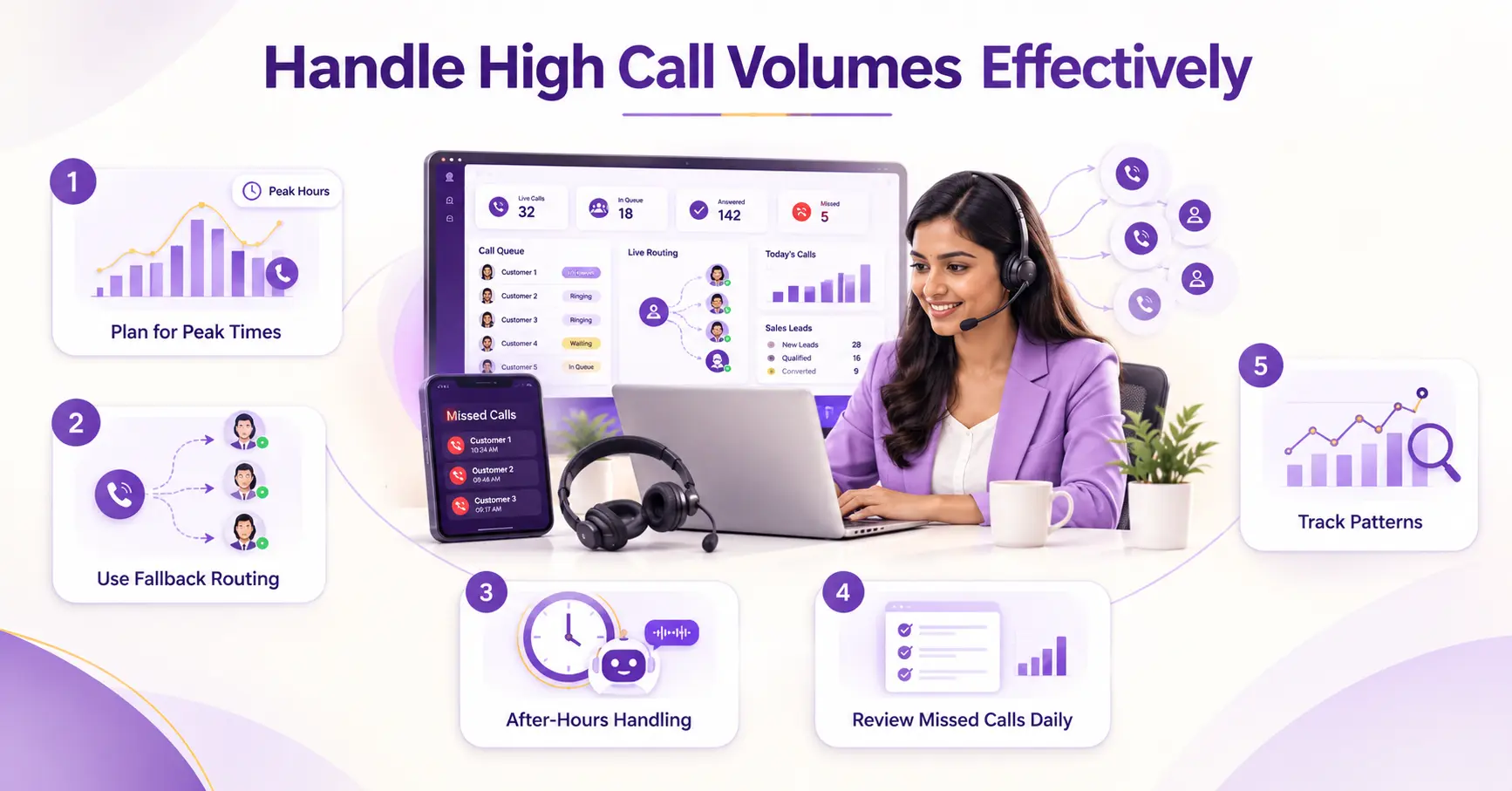
How to Handle High Call Volumes and Missed Sales Calls
A missed sales call can mean a lost chance to talk to a buyer. High call volumes during campaigns or festive seasons make this more likely.
Here are practical steps:
- Plan for peak times. Look at past call patterns and add agents when you expect more calls.
- Use fallback routing. If one agent is busy, send the call to another.
- Set clear after-hours handling. Let callers know when you will respond.
- Review missed calls daily. Assign someone to call back quickly.
- Track patterns. If misses happen at the same hour each day, adjust schedules.
For teams that need structured agent handling, a Cloud Call Center setup can help organise agents and calls. No system removes missed calls completely, but good processes reduce them.
Practical Example: A Business Managing Sales Enquiries Through a Toll-Free Number
Consider a company that sells home appliances online and through dealers. This is an illustrative example, not a customer case study.
The company prints one toll-free number on its website, ads, and product boxes. When a customer calls, a short menu offers two options: new purchase enquiry or order support. Purchase enquiries go to a three-person sales group. If the first agent is busy, the call moves to the next.
Each morning, the sales manager reviews calls from the previous day. Missed calls are assigned for callback. Over a few weeks, the manager notices that most missed calls happen after lunch and adjusts the schedule.
The result is a clearer process. The company still depends on its team to respond well, but it is no longer losing track of who called.
Industries That Can Use Toll-Free Numbers for Sales
Not every business needs a toll-free number. It tends to suit teams that receive regular inbound enquiries. Examples include:
- E-commerce: Pre-purchase questions and order-related enquiries.
- Real estate: Property enquiries from ads and listings.
- Education and training: Admission and course enquiries.
- B2B companies: Product or service enquiries from new prospects.
- Service-based businesses: Booking and quote requests.
- Small and medium businesses: Teams that want a single, professional contact number.
If your business gets few inbound calls, a regular number may be enough.
How to Choose the Right Toll-Free Number Service for Your Sales Team
Look at how the service fits your daily workflow, not just the price. Consider these questions:
- Is pricing clear? Understand what is included and what costs extra.
- Does it support routing and IVR? Check that you can set rules that match your team.
- Can it handle multiple agents? Make sure it works as your team grows.
- What reports are available? Look for call logs and missed call data.
- How reliable is call quality? Poor audio can hurt sales conversations.
- Is support available? You need help when something goes wrong.
- Can it connect with other tools? Ask about integrations if you use a CRM, where available.
Ask the provider for a demo or a clear feature list before you commit.
How Mishtel Can Help Businesses Manage Sales Communication
Mishtel Services provides business communication and cloud telephony solutions. For sales teams, relevant options include toll-free numbers, IVR, and cloud call center tools.
Some teams also use other services alongside their toll-free line. For example, Bulk Voice Call Service can share recorded updates or reminders with contacts who have agreed to receive them. A Click2Call Service can let website visitors request a call, where it suits the workflow.
The right tools depend on your call volume, team size, and process. The Mishtel team can explain available options and help you decide what fits.
Conclusion
A toll-free number can give sales teams a single, clear way to receive and manage customer enquiries. With routing, IVR, and call records (where available), teams can handle calls more organised. The real value comes from using these tools consistently and following up on every enquiry.
If you want to discuss your business calling and sales enquiry requirements, contact the Mishtel team and explore the options that suit your workflow.
Can a toll-free number help manage incoming sales calls?
Yes. It centralises calls in one system, and routing rules can send them to the right agent. Reports, where supported, can help managers review call activity.
Does a toll-free number increase sales?
Not automatically. It can make it easier for customers to reach you and for your team to handle calls. Results depend on your product, pricing, and how well your team responds.
What is the role of IVR in sales call management?
IVR lets callers choose an option from a menu. This helps sort enquiries, such as new purchases and existing orders, before they reach an agent.
Is a toll-free number only for large companies?
No. Small and growing businesses can use one if they expect regular inbound calls. Compare plans and costs to see if it suits your volume.
How can a business reduce missed sales calls?
Plan staffing for busy hours, use fallback routing, and review missed calls daily. Quick callbacks also help. No setup removes missed calls completely.