

In today’s digital world, customer communication is evolving faster than ever. Traditional SMS is no longer enough to capture attention or deliver engaging experiences. Businesses now need smarter, richer, and more interactive ways to connect with their audience.
This is where Google RCS Messaging comes into the picture.
RCS (Rich Communication Services) is transforming the way businesses communicate by offering a modern messaging experience that goes far beyond basic text messages.
What is Google RCS Messaging?
Google RCS Messaging is an advanced messaging protocol that upgrades traditional SMS into a rich, interactive communication channel.
Unlike SMS, RCS allows businesses to send:
- Images and videos
- Buttons and quick replies
- Carousels and product showcases
- Real-time updates
In simple terms, it turns regular messaging into an experience similar to a mobile app or chat platform.
Why RCS Messaging is Gaining Popularity
Let’s be honest — plain text messages often get ignored.
Customers today expect visually rich and interactive communication. With RCS, businesses can deliver exactly that.
Here’s why RCS is becoming popular:
1. Rich User Experience
RCS messages look modern and engaging, making them more appealing than simple SMS.
2. Higher Engagement Rates
Interactive elements like buttons and images encourage users to take action.
3. Verified Business Messaging
Customers can see verified sender information, which builds trust.
4. Real-Time Interaction
Users can respond instantly using suggested replies and actions.
How RCS Business Messaging Works
The process is simple:
- A business creates an RCS campaign
- Rich messages are sent to users
- Customers interact using buttons or replies
- Businesses track engagement in real-time
This creates a smooth and interactive communication flow.
Key Features of Google RCS Messaging
RCS offers several powerful features that make it stand out:
- Rich media support (images, GIFs, videos)
- Read receipts and typing indicators
- Interactive buttons (call, visit, buy)
- Branded sender profiles
- Analytics and tracking
These features help businesses deliver a better customer experience.
RCS vs Traditional SMS
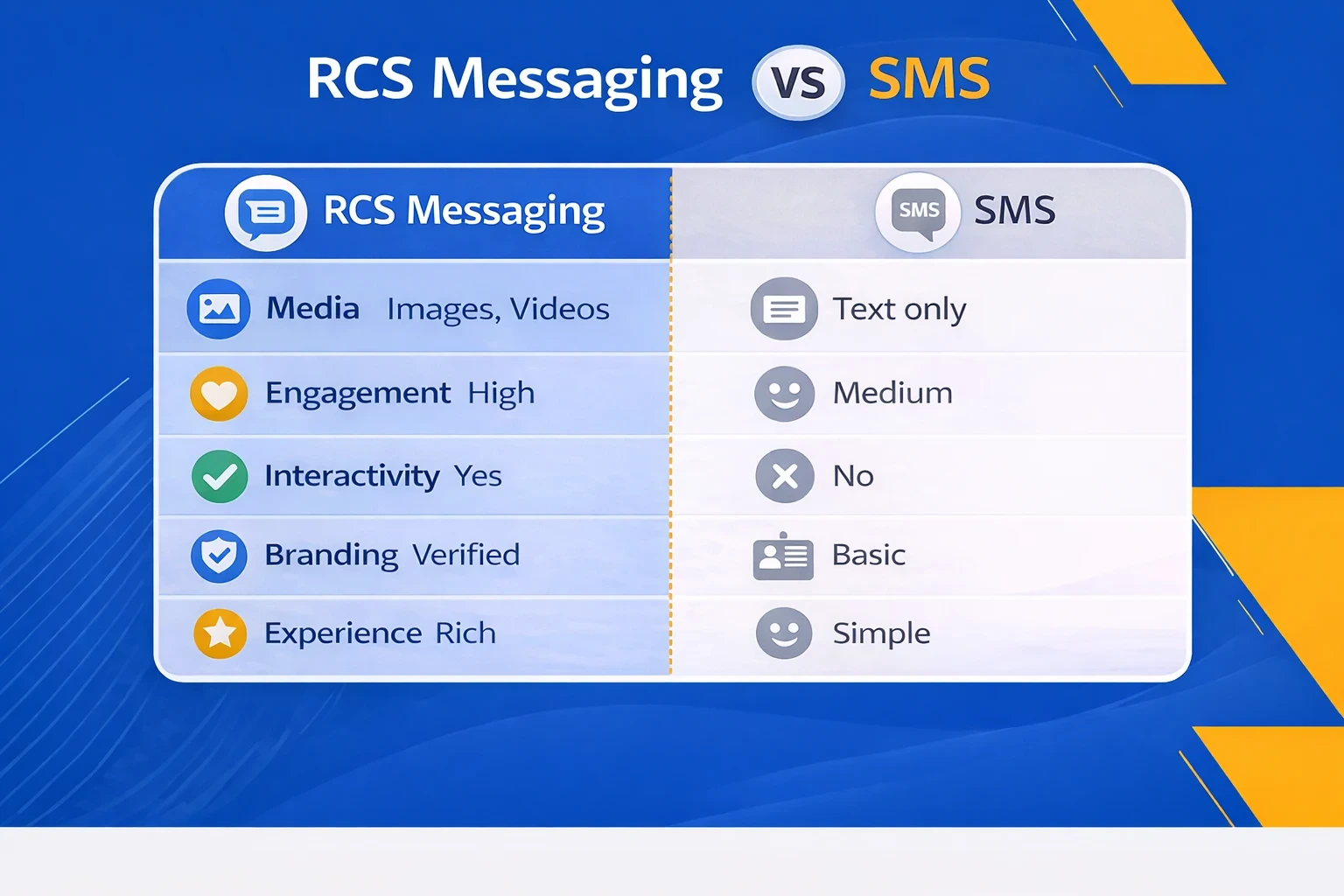
Clearly, RCS offers a more advanced and engaging communication method.
Use Cases of RCS Messaging
RCS is being used across multiple industries:
- E-commerce: Product promotions and offers
- Banking: Transaction alerts and updates
- Travel: Booking confirmations and tickets
- Retail: Personalized marketing campaigns
- Customer support: Quick responses and assistance
Combine RCS with Other Channels
To get the best results, businesses often combine RCS with:
- WhatsApp Business Messaging – for broader reach
- Bulk SMS Service – as a fallback channel
This multi-channel approach ensures that your message always reaches the customer.
Benefits of Using RCS for Your Business
✔ Better Customer Engagement
Interactive content keeps users interested and active.
✔ Improved Conversion Rates
Buttons and CTAs make it easier for users to take action.
✔ Strong Brand Presence
Verified profiles increase trust and credibility.
✔ Real-Time Communication
Instant replies improve customer experience.
Challenges to Consider
While RCS is powerful, there are a few things to keep in mind:
- Not all devices support RCS yet
- Internet connection is required
- Initial setup may take time
However, adoption is growing rapidly, making it a future-ready solution.
Why RCS Messaging is the Future
Customer expectations are changing.
People want:
- Visual content
- Instant responses
- Easy interaction
RCS delivers all of this in one place.
It bridges the gap between SMS and app-based messaging, making it one of the most promising communication tools for businesses.
Final Thoughts
Google RCS Messaging is more than just an upgrade to SMS — it’s a complete transformation of business communication.
If you want to engage your customers in a smarter, more interactive way, RCS is worth exploring.
It helps you stand out, connect better, and create meaningful customer experiences.
RCS supports rich media, branding, and interactivity, while SMS is limited to basic text messages without advanced features. RCS messaging requires internet data and may involve service provider costs for businesses, but it offers better engagement compared to SMS. Yes, RCS is widely used for promotions, customer engagement, notifications, and interactive campaigns. RCS works on most Android devices with Google Messages enabled, but it may not be supported on all devices yet. RCS and WhatsApp both offer rich messaging. RCS works natively on mobile messaging apps, while WhatsApp requires app installation.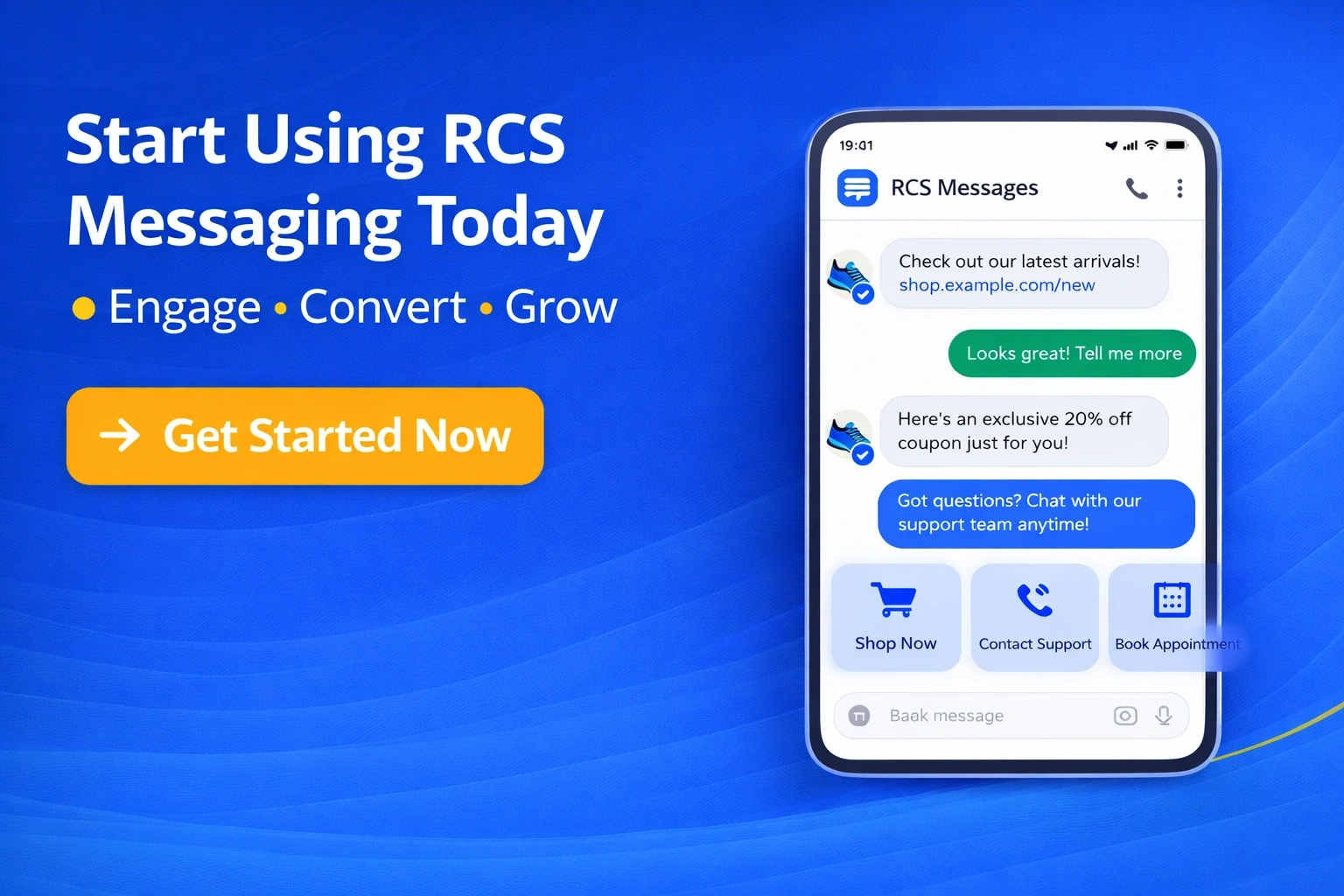
How is RCS different from SMS?
Is RCS messaging free?
Can RCS be used for business marketing?
Does RCS work on all devices?
Is RCS better than WhatsApp for business?