


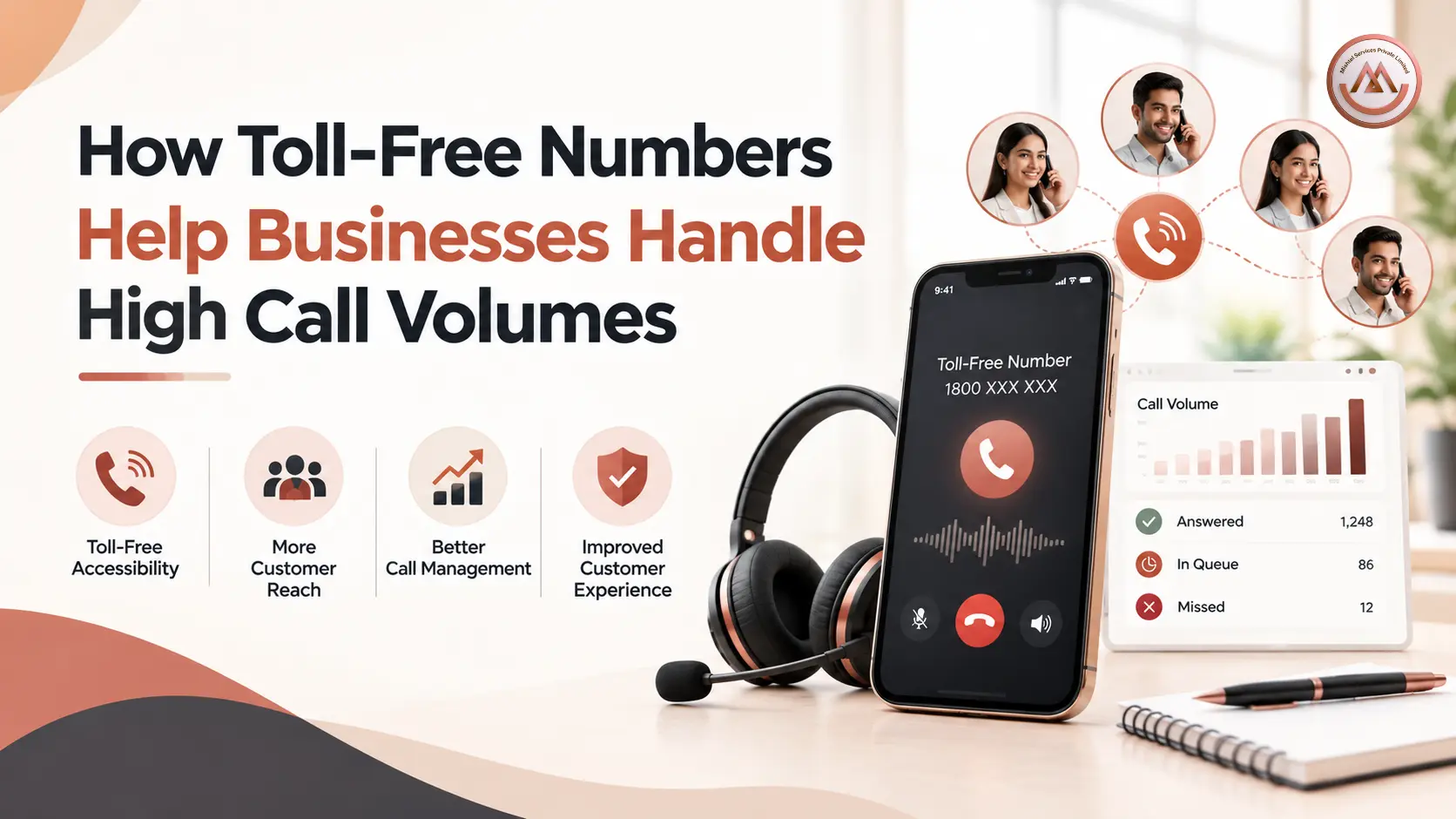
Every business has its peak days. A festive sale goes live, a product launches, admission season opens, or a service outage affects hundreds of customers. Suddenly, the phone does not stop ringing, and the team cannot keep up.
A Toll-Free Number will not add agents or fix a weak process. It can, however, give customers one clear number to call and give your team a base for organising those calls. When it is paired with the right call management setup, a toll-free number service can make busy periods easier to handle. This article looks at the high-volume problem itself: what goes wrong, what helps, and how to plan.
Why Businesses Struggle with High Call Volumes
Most call problems during busy periods come from a few common causes:
- Missed or unanswered calls: Agents are on other calls, or no one is assigned to pick up.
- Long waiting times: Callers wait on hold or hear a busy tone and give up.
- Repeated enquiries: Many people ask the same question, such as “Where is my order?”
- Calls reaching the wrong team: Sales calls land with support, and billing queries reach technical staff.
- Limited visibility: Managers do not know when calls peak or how many were missed.
A toll-free number alone does not solve these problems. It works best as the front door to a well-planned system.
How Toll-Free Numbers Help Manage High Call Volumes
A toll-free number gives customers a free-to-call business number, while the business pays the applicable call charges. Exact conditions depend on the number type and telecom arrangements. In a high-volume setting, its main value is structure:
- A single business contact number: Customers do not have to hunt for the right number during a busy period.
- Easier access to support: Callers do not worry about call charges before they reach out.
- Better organisation of incoming enquiries: All calls pass through one system instead of personal phones.
- Centralised communication across branches: One public number can serve customers across locations.
- A consistent contact experience: Customers see the same number on your website, invoices, and ads.
It helps to be clear about what a toll-free number does not do. It does not add agents. It does not create menus, queues, or reports by itself. Those depend on IVR, call routing, and other features that your plan and configuration must include. If you want to see how a call moves through the system, read this guide to how toll-free number service works for customer support.
The Role of IVR and Call Routing in Busy Calling Periods
IVR stands for Interactive Voice Response. It is an automated menu that greets callers and lets them choose an option with their phone keypad. Call routing then sends the call to the right team.
Here is a simple example:
- Press 1 for Sales
- Press 2 for Customer Support
- Press 3 for Billing
A caller who presses 3 goes straight to the billing team. Without a menu, that caller might first reach a sales agent who then has to transfer the call. During a rush, those transfers add up.
IVR can also play a recorded message, such as support hours or a common update, depending on how you set it up. Actual functionality depends on your provider, configuration, and plan. Mishtel’s IVR Service is one option for teams that want a menu-based setup.
How Businesses Can Organise Incoming Calls More Efficiently
Good call handling starts before the busy period. Use this approach:
- Identify common enquiries. List the five or six reasons customers call most often.
- Create clear IVR options. Keep the menu short. Too many choices frustrate callers.
- Route calls to the right team. Match each menu option to a department or agent group.
- Plan staffing for peak periods. Look at past busy days and schedule more agents around those times.
- Review call reports where available. Check peak hours, missed calls, and call volume by department.
- Keep customers informed. Tell callers what happens next, such as expected callback times or support hours.
Here is a short illustration. Imagine an online store preparing for a festive sale. The team reviews last year’s busiest hours, adds two agents for those hours, and sets menu options for order status and returns. During the sale, the manager checks the missed-call report each morning and assigns callbacks. The setup does not remove every missed call, but it gives the team a clear way to respond.
If your calls come mostly from prospects, the approach differs slightly. This article on managing sales calls with a toll-free number covers sales workflows in more detail.
Industries That May Benefit from Toll-Free Numbers
Needs differ by industry and by business. Examples of where regular high call volumes can occur include:
- E-commerce and retail: Order tracking, delivery, and returns during sales.
- Banking and financial services: Account queries and service requests.
- Healthcare and appointment services: Booking and rescheduling calls.
- Travel and hospitality: Booking changes, especially in peak seasons.
- Education and training: Admission enquiries during enrolment periods.
- B2B sales and customer service: Product questions and support requests.
Not every business in these sectors has the same call pattern. A small clinic and a large hospital group will need different setups.
Toll-Free Number Alone vs Toll-Free Number with IVR
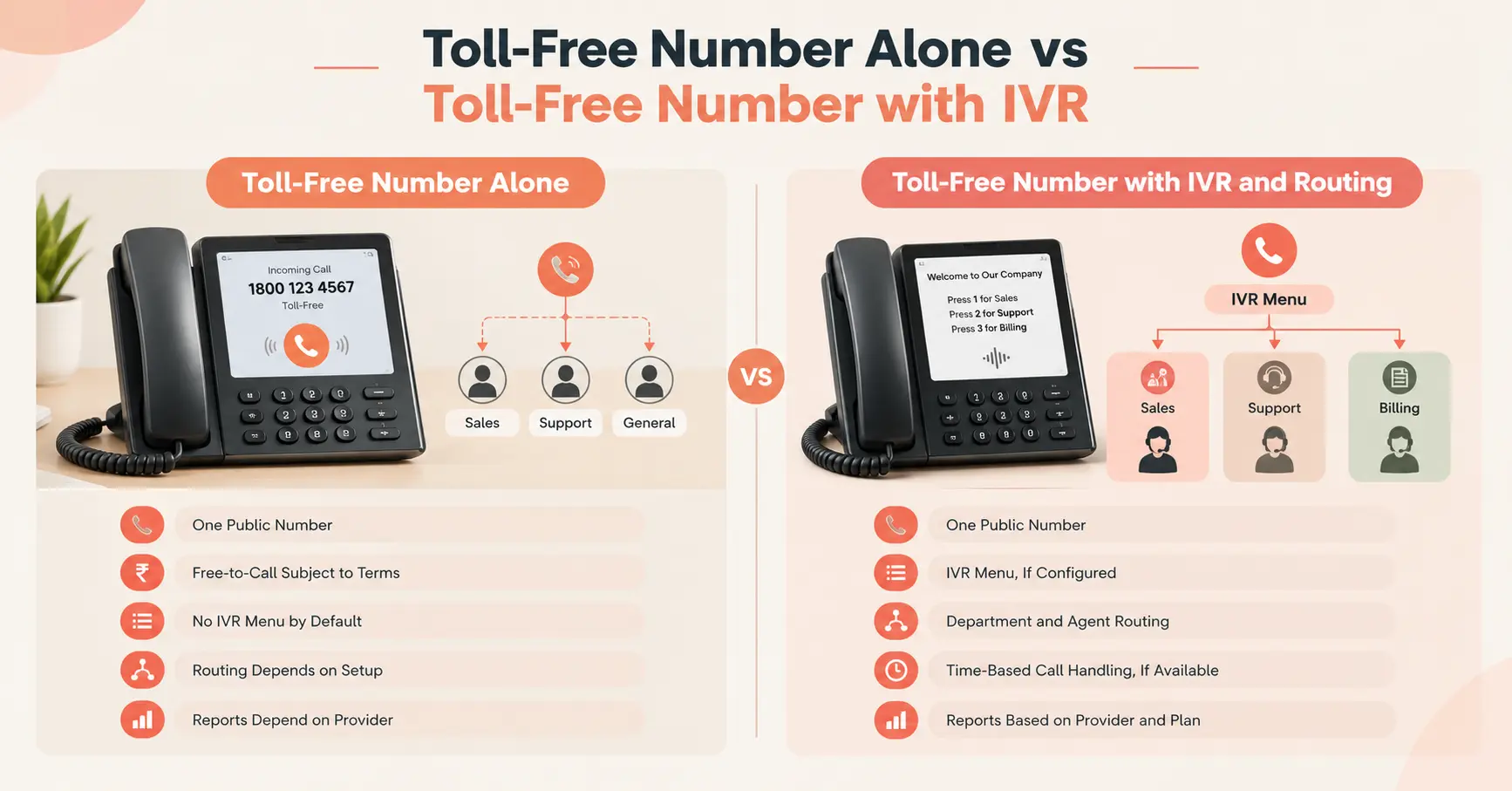
The right choice depends on your call volume and how many departments you have. A business with few calls may not need a menu. A business with many departments probably will. Features differ between providers, so confirm each one directly.
What to Check Before Choosing a Toll-Free Number Service
Before you choose, ask the provider about:
- Expected call volume: Share your normal and peak numbers.
- Concurrent call capacity: Ask how many calls can be handled at the same time.
- Routing and IVR features: Check menus, forwarding, and time-based rules.
- Reporting and monitoring: Look for call logs, missed-call data, and peak-hour reports.
- Integration needs: Ask whether the service connects with your CRM or other tools.
- Support availability: Find out when help is available, especially during campaigns.
- Pricing and charges: Understand what is included and what costs extra.
- Scalability: Ask how easily you can add agents or departments later.
No provider offers unlimited capacity, so be wary of any claim that suggests otherwise. Larger teams with many agents may also need a Cloud Call Center setup to manage queues, agents, and reports in one place.
How Mishtel Can Help Businesses Explore Call Management Solutions
Mishtel Services is an Indian business communication and cloud telephony provider. According to its Toll-Free Number page, the service covers 1800 and 1860 numbers. The page lists features such as multi-level IVR, smart call forwarding, time-based routing, multi-location support, call recording, missed call alerts, real-time analytics, and CRM integration.
Features and plans can vary, so the best step is to share your own requirements. Useful details to bring to the conversation include your average and peak call volume, the departments you need, the locations you serve, and the reports you want.
You can contact the Mishtel team to discuss these requirements and explore a setup that fits your business.
Conclusion
A toll-free number can give businesses a single, clear contact point for customers, which is a useful base when calls spike. The real benefit comes from combining it with suitable IVR, routing, reporting, and staffing plans. A toll-free number service on its own does not manage a rush, but a well-planned setup can make it easier to organise.
To see how this could work for your business, explore Mishtel’s toll-free number and cloud telephony options, or contact the team to discuss your call management needs.
Yes, if the service includes IVR. The menu greets callers and lets them choose options. Confirm the available menu levels and routing features with your provider. No. Missed calls still happen when agents are busy or support is closed. Routing, backup agents, after-hours handling, and callback processes can reduce them. Yes. With IVR and routing rules, one number can send callers to sales, support, billing, or other teams. The exact setup depends on your provider and plan. Consider expected call volume, concurrent call capacity, routing and IVR options, reporting, integrations, support, pricing, and scalability. Ask for a demo or a clear feature list before committing.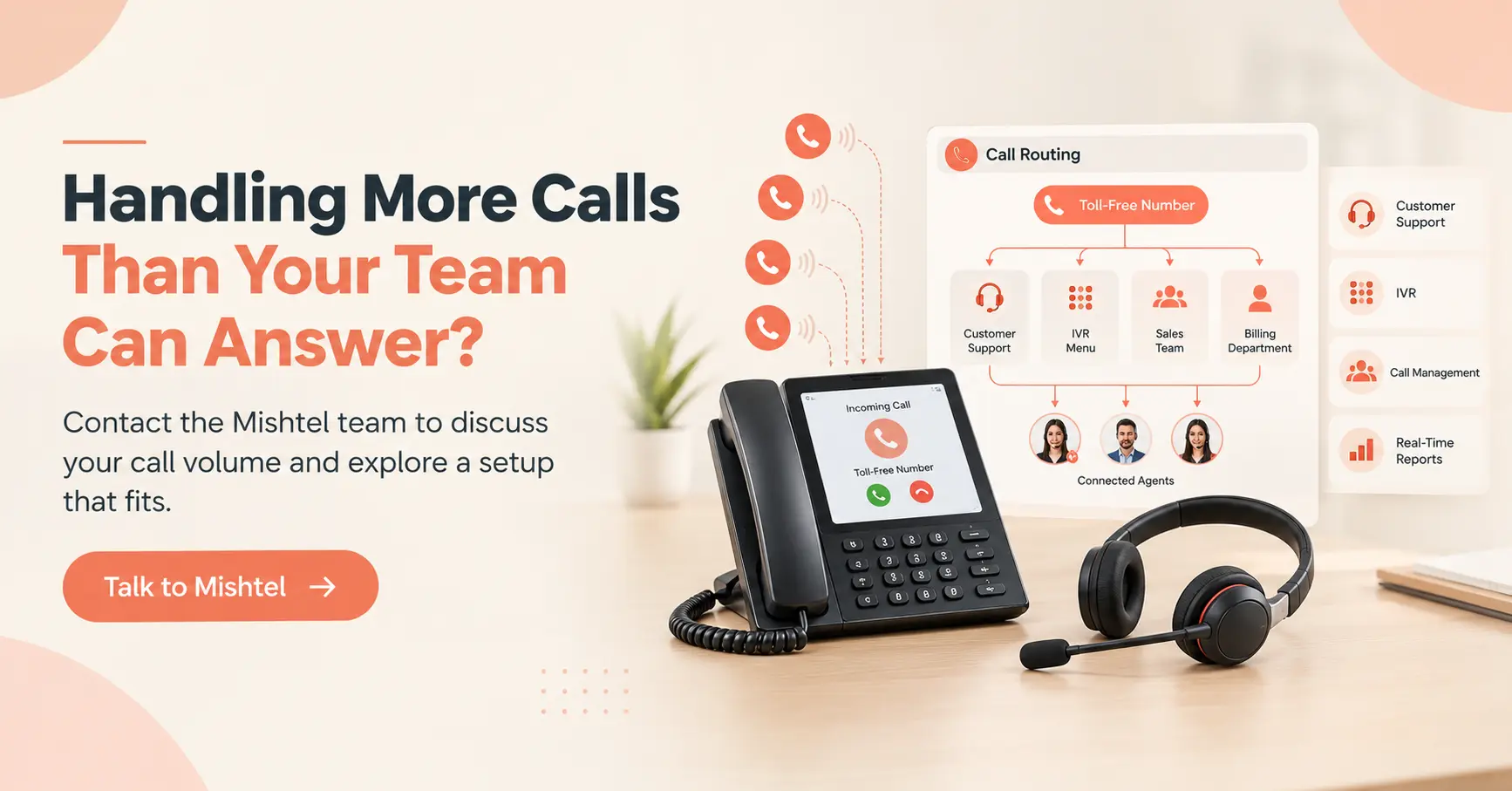
Can a toll-free number work with an IVR system?
Does a toll-free number automatically prevent missed calls?
Can businesses use one toll-free number for multiple departments?
What should a business consider before choosing a toll-free number service?