

A patient books an appointment. The day arrives. They do not show up.
No call. No cancellation. Just an empty slot that could have helped someone else.
This happens in hospitals across India every single day. Studies suggest that no-show rates in healthcare can run as high as 30%. For busy hospitals and clinics, that is a serious problem, leading to wasted staff time, lost revenue, and patients missing the care they actually need.
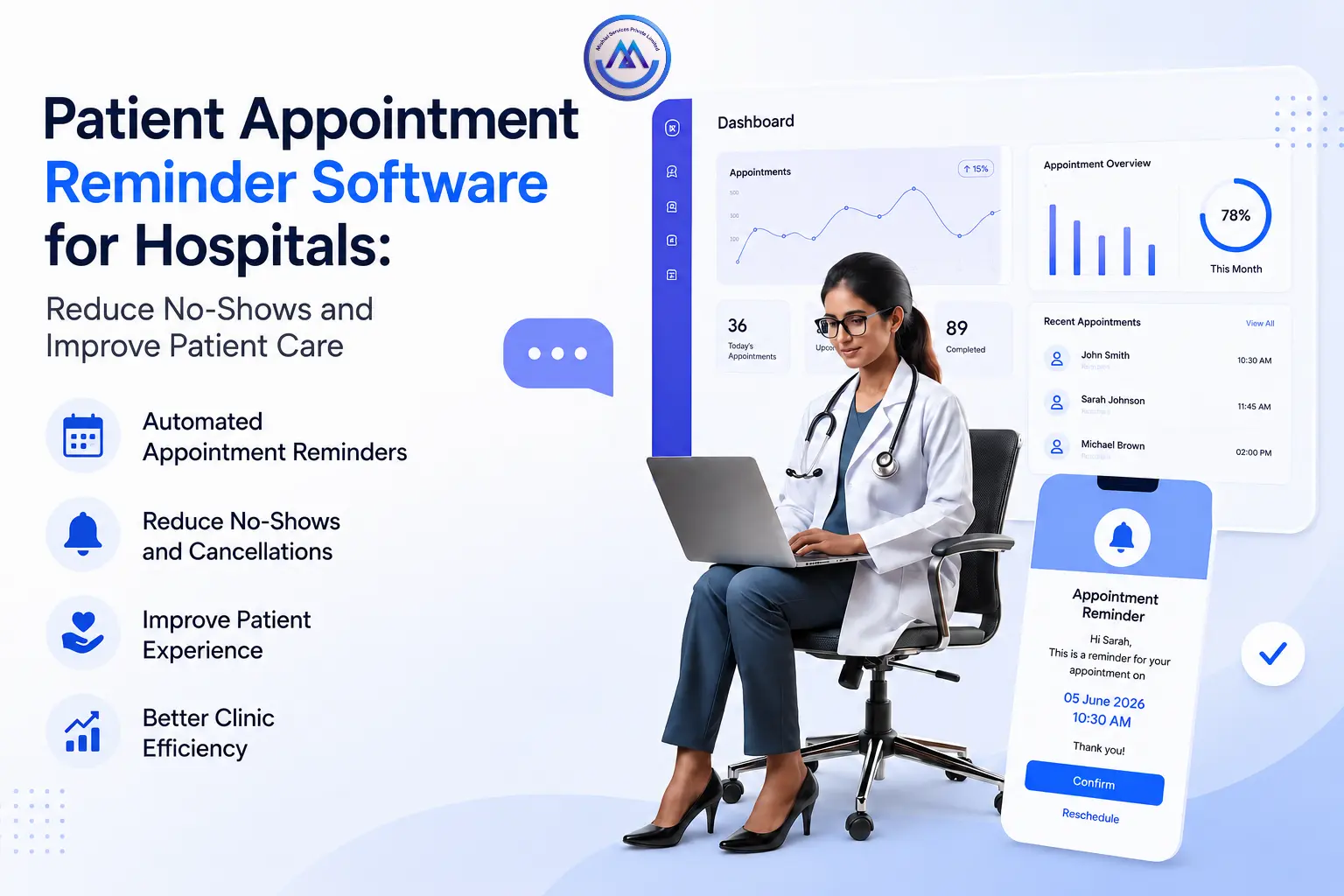
Patient appointment reminder software fixes this. It automates the entire reminder process, sending timely alerts across multiple channels so patients show up, reschedule when needed, and stay engaged with their healthcare provider.
Here is everything you need to know.
Why Do Patients Miss Appointments?
Before solving the problem, it helps to understand it.
Most no-shows are not intentional. Patients forget. Life gets busy. They meant to reschedule but never got around to it. In many cases, a simple reminder sent at the right time on the right channel would have been enough to bring them in.
Patient appointment reminder software addresses this directly. It sends automated reminders via voice calls, SMS, WhatsApp, email, and RCS well before the appointment date. If a patient cannot make it, they can confirm, cancel, or reschedule with a single reply.
The result? Fewer empty slots. Better patient attendance. Healthier outcomes.
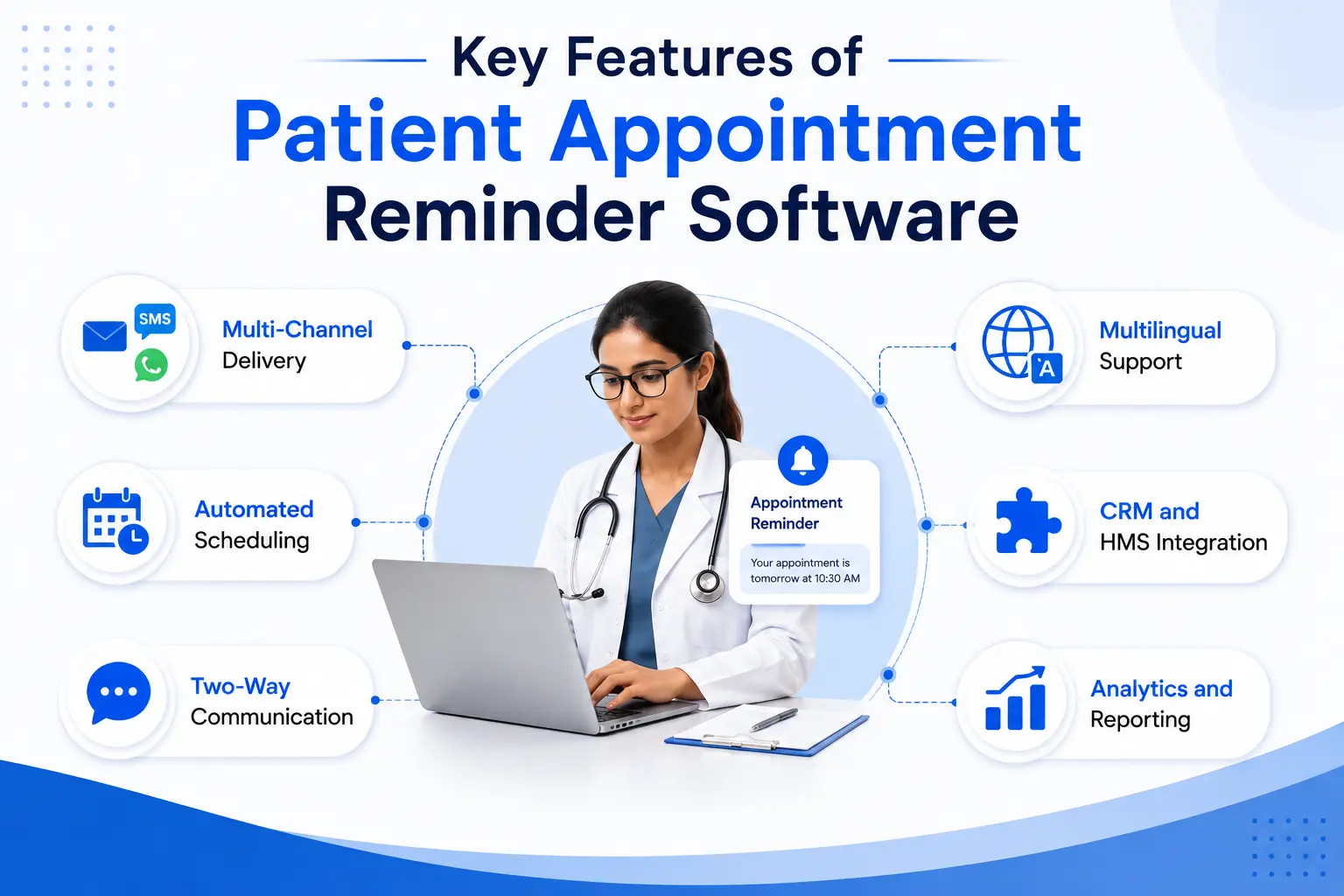
Key Features of Patient Appointment Reminder Software
Not all reminder tools are built the same. Here is what a strong system should include:
Multi-Channel Delivery. Patients are on different platforms. Some prefer calls. Others respond better to WhatsApp or email. A good patient appointment reminder software sends reminders across all channels so every patient gets notified in the way that works best for them.
Automated Scheduling. Reminders should go out automatically 48 hours before, 24 hours before, and on the morning of the appointment. No manual work. No staff intervention required.
Two-Way Communication. Patients should be able to confirm, cancel, or request a reschedule directly from the reminder message. This makes the process effortless for them and keeps your calendar accurate in real time.
Multilingual Support. India is a diverse country. Reminder messages in the patient’s preferred language, Hindi, Tamil, Telugu, or others, improve response rates significantly.
CRM and HMS Integration. The software should connect with your Hospital Management System (HMS) or CRM, so reminders are triggered automatically based on appointment data — no manual uploads, no duplicate entries.
Analytics and Reporting. Track delivery rates, confirmation rates, and no-show trends. Use this data to improve your outreach strategy continuously.
How Multi-Channel Reminders Work in Practice
Here is a simple example of how a well-designed reminder flow works:
A patient books a consultation for Friday. On Wednesday morning, they received an automated voice call through Bulk Voice reminding them of the appointment. That evening, a WhatsApp message arrives with the appointment details and a quick confirm or cancel option.
On Thursday, a Bulk Email goes out with the doctor’s name, clinic address, and any preparation instructions. On Friday morning, a final reminder arrives through Google RCS, a rich, branded message with a map link and a one-tap confirmation button.
If the patient cannot attend, they reply to reschedule. The slot opens up automatically. Another patient fills it.
The entire flow runs without a single staff member picking up the phone.
The Impact on Patient Care
Reducing no-shows is not just a business outcome. It is a patient care outcome.
When patients attend their appointments consistently, conditions get caught earlier. Treatment plans stay on track. Follow-up care happens as planned. Preventable complications become less common.
Hospitals that use patient appointment reminder software do not just see better occupancy rates. They see measurably better health outcomes and patients who trust their healthcare provider to stay connected with them.
Why Get This Solution from Mishtel?
Mishtel is a full cloud communication platform built for businesses that need to reach customers and patients at scale. For hospitals and healthcare providers, it offers everything required to run a complete, automated appointment reminder system.
All channels, one platform. Voice calls, WhatsApp Business, email, RCS, and SMS all from a single dashboard. You do not need multiple vendors or separate tools. Manage every communication channel in one place through the Call Center platform.
Fully automated workflows. Set up your reminder schedule once. Delivery runs automatically based on your appointment data. No manual effort from your staff.
Multilingual messaging. Reach patients in their native language. Major Indian languages are supported, so your reminders feel personal and relevant.
Two-way responses. Patients can confirm, cancel, or reschedule directly from the reminder. Your calendar updates in real time.
CRM and HMS integration. The platform connects with leading hospital management and CRM systems. Reminders trigger automatically as appointments are booked or modified.
99.9% uptime. Your reminder system runs on reliable cloud infrastructure. Reminders go out on time, every time.
Transparent pricing. No hidden charges. Choose a plan that fits your hospital’s size and communication volume.
Whether you run a single clinic or a large multi-specialty hospital, the right tools can reduce no-shows, improve patient engagement, and deliver better care.
Final Thoughts
A missed appointment is a missed opportunity for revenue, for care, and for the patient relationship.
Patient appointment reminder software is one of the simplest, highest-ROI investments a hospital can make. The technology exists. The channels are proven. The only question is whether your facility is using them.