


A customer books a service and wants to know when the technician will arrive. A parent needs to hear that school timings have changed. A shopper is waiting for a delivery update. In each case, people want short, timely information, and the business has to send it to many people at once.
Bulk SMS Service are one common way to do this. This guide explains how they work, where businesses use them, how message types differ, and what to check before choosing a provider.
What Are Bulk SMS Services?
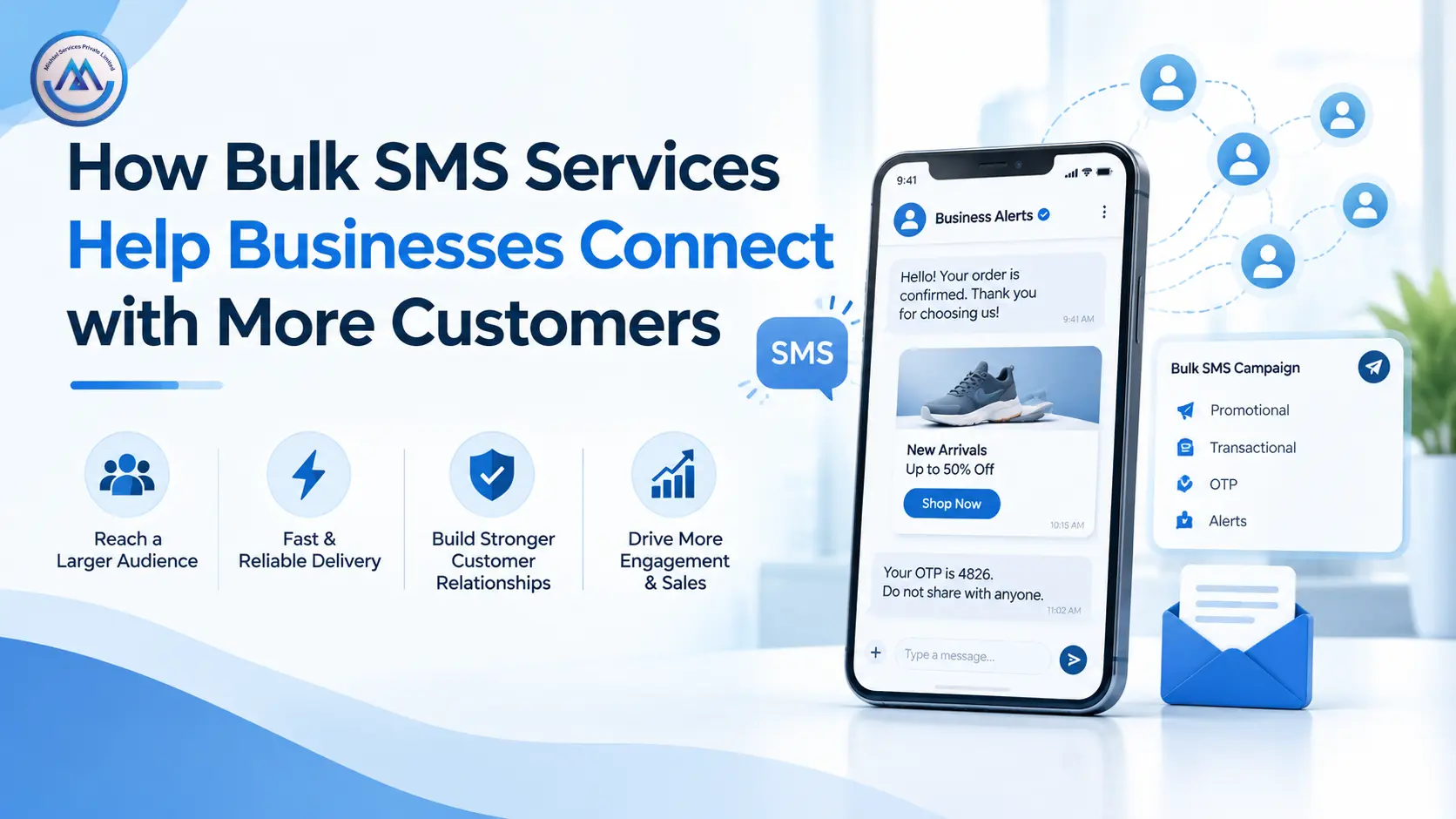
Bulk SMS services let a business send text messages to many recipients through one platform, instead of sending them one by one from a phone. Businesses use them for offers, order updates, reminders, alerts, and notices.
Whether a message arrives depends on several factors: valid phone numbers, network conditions, sender setup, and applicable telecom requirements. No platform can promise that every message reaches every person.
How Do Bulk SMS Services Work?
Most campaigns follow five steps:
- Select your contact list. Use contacts you are permitted to message.
- Write a clear message. Keep it short and make the purpose obvious.
- Configure the sender and message settings. The platform will ask for sender details and message type, depending on the setup.
- Schedule or send. Send right away or pick a time.
- Review delivery reports. Check which messages were reported as delivered or failed.
Features differ between providers, so confirm what each platform offers.
How Bulk SMS Services Help Businesses Connect with Customers
Used well, bulk SMS can help a business:
- Share timely information: Updates reach people while they still matter.
- Reach many customers efficiently: One campaign replaces hundreds of individual messages.
- Send consistent messages: Everyone receives the same wording.
- Support promotions and announcements: Offers and events reach people on their phones.
- Keep customers informed about services: Order, booking, and service updates reduce uncertainty.
- Support different departments: Sales, support, accounts, and operations can all use the same platform.
These are possible benefits, not promises. Results depend on how relevant your message is and who receives it.
Common Business Uses of Bulk SMS
- Promotional offers and sales announcements: A discount notice for customers who opted in.
- Order confirmations and shipping updates: “Your order has shipped” with a tracking link.
- Appointment reminders: A clinic or salon reminding customers of their booking.
- Payment and due-date reminders: A reminder before a bill or EMI date.
- Event invitations and announcements: Dates, venues, and timings.
- School and college notifications: Holidays, exams, and fee deadlines.
- Service updates: Maintenance windows or changes in support hours.
- Customer feedback requests: A short message with a link to a form.
- Important account or operational alerts: Security or status notices.
Promotional SMS vs Transactional and Service Messages
Message type matters because it affects the templates, sender setup, and consent a business needs. In general:
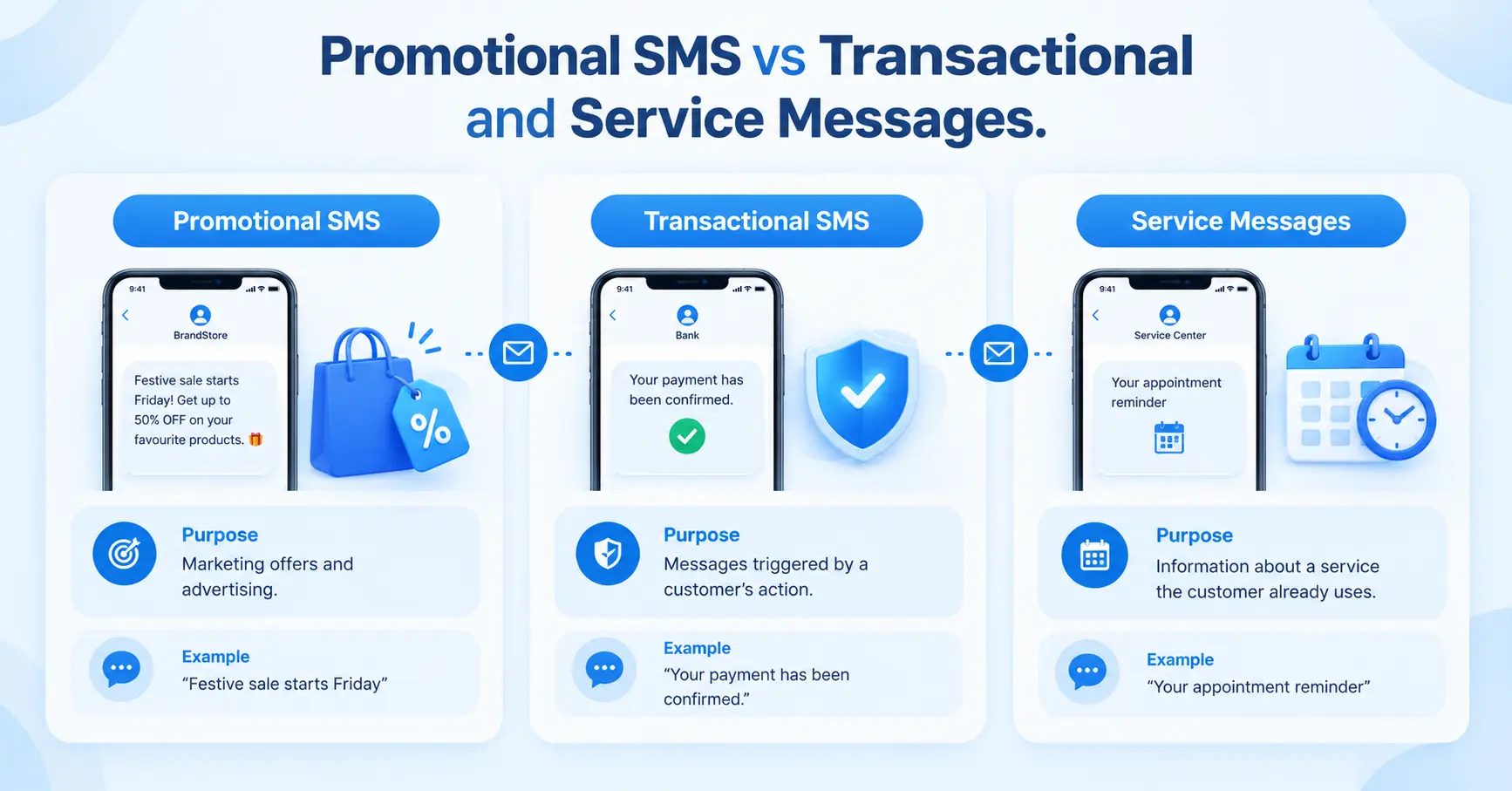
TRAI’s rules, known as the Telecom Commercial Communications Customer Preference Regulations (TCCCPR), 2018, set categories for commercial messages and require senders to register their templates and headers. A February 2025 amendment tightened parts of this. Under it, a message that mixes promotional content with a transactional or service message is treated as promotional. It also says consent that is implied for transactional and service messages lasts only while the relationship or transaction continues. Headers will also carry a suffix that shows the message type, so customers can tell them apart.
Rules and categories can change. Read the current text on TRAI’s website: the TCCCPR 2018 and the February 2025 amendment. Ask your provider to confirm which category suits each message. This article is general information, not legal advice.
Which Industries Can Benefit from Bulk SMS Services?
- Retail and e-commerce: Order confirmations, dispatch and delivery updates, and offers to opted-in customers.
- Education: Admission dates, exam schedules, fee reminders, and notices to parents.
- Healthcare: Appointment reminders and follow-up notices, with care for patient privacy.
- Banking and financial services: OTPs, transaction alerts, and due-date reminders.
- Travel and hospitality: Booking confirmations, check-in details, and itinerary changes.
- Logistics: Pickup and delivery status updates.
- Other service businesses: Technician visit times, appointment slots, and service completion notices.
Each business has different needs. A hospital and a gym will not use SMS in the same way.
What to Look for in a Bulk SMS Service Provider
Compare providers on these points:
- Delivery reporting: Can you see what happened to each message?
- Campaign management: Is it easy to schedule and repeat campaigns?
- Contact list management: Can you upload, group, and clean lists?
- Platform usability: Can your team learn it quickly?
- Scalability: Will it handle larger volumes later?
- Technical support: Who helps when something fails?
- Pricing transparency: What is included and what costs extra?
- Security and privacy: How is your customer data protected?
- Compliance support: How does the provider help with registration and templates?
Features vary across the industry, so verify each point for any provider you consider.
Bulk SMS Best Practices for Better Customer Communication
- Keep messages short and clear. One message, one purpose.
- Say who you are. Customers should recognise the sender at once.
- Send at appropriate times. Avoid hours that may annoy people.
- Use relevant, lawfully obtained lists. Never message people who have not agreed to hear from you.
- Respect consent and opt-outs. Remove people who ask to stop.
- Avoid misleading claims and over-messaging. Too many messages push people away.
- Include a clear next step. A link, a phone number, or a date helps.
- Track results and improve. Review delivery data and adjust future messages.
If your message invites a phone reply, plan for the calls. A Cloud Call Center can help your team manage inbound calls, and an AI voice agent is an option some businesses consider for routine call queries. For urgent alerts, some teams add Mishtel next to SMS, and an IVR Service can guide callers to the right department.
How Mishtel Supports Business Communication
Mishtel is an Indian business communication and cloud telephony provider. According to its service page, Mishtel’s Bulk SMS service covers promotional, transactional, and OTP messages, plus other types such as dynamic, flash, and international SMS. The page lists DLT-compliant messaging, sender ID management, SMS API integration, delivery tracking and reports, and support for regional languages.
Requirements differ for each business, so the best way to evaluate any service is to share your use case. Useful details include your message types, expected volume, languages, and the reports you need. You can explore the service or contact the Mishtel team to discuss your requirements.
Conclusion
Bulk SMS services can help businesses share timely, consistent information with many customers. They work best when messages are relevant, correctly categorised, and sent to people who expect them. Before you choose a provider, compare reporting, support, pricing, and compliance help, and always check the current TRAI rules.
To see how bulk SMS can fit your communication needs, explore Mishtel’s Bulk SMS service or contact the team.
How do bulk SMS services work?
You prepare a permitted contact list and a message, set up the sender and message type, then send or schedule. You can review delivery reports afterwards.
Which businesses can use bulk SMS?
Retailers, schools, clinics, banks, logistics firms, and other service businesses can use it. The right use depends on your audience and the rules that apply.
Can businesses use bulk SMS for reminders and updates?
Yes. Appointment reminders, order updates, and due-date notices are common uses. Make sure each message is classified under the correct category.
What is the difference between promotional and transactional SMS?
Promotional SMS advertises products or offers. Transactional SMS is triggered by a customer’s action, such as an OTP or payment confirmation. Rules and templates can differ for each.
How should a business choose a bulk SMS service provider?
Compare reporting, usability, scalability, support, pricing clarity, security, and compliance help. Test with a small campaign before sending to a full list.
How can businesses get started with Mishtel?
Contact the Mishtel team and share your use case, message types, and expected volume. The team can explain the options available.